An electric dryer runs on 240 V, which is delivered as two 120 V legs. The motor and controls use one leg, and the heating element uses both. That is why a dryer can tumble perfectly while producing no heat — one leg has failed.
This guide covers the voltage test for both outlet types, the safety rules for 240 V, and the apartment-specific constraints around shared laundry rooms.
On this page
3-prong vs 4-prong
There are two dryer outlet types in North American apartments, and the test differs slightly for each.
| Outlet type | Slots | What it carries |
|---|---|---|
| 3-prong (NEMA 10-30) | Two angled hot slots + L-shaped neutral | Two hots + neutral (ground via neutral) |
| 4-prong (NEMA 14-30) | Two angled hot slots + neutral + round ground | Two hots + neutral + separate ground |
The 4-prong outlet is the modern standard and has been required for new installations since 1996. The 3-prong type bonds the ground to the neutral, which is why it is no longer installed — but it is still common in older apartments.
Safety first
A dryer outlet is 240 V at up to 30 amps. That is the highest-energy test in this guide, and NFPA 70E treats it as a serious hazard. The rules are not optional.
- Use a CAT III 600 V meter — a basic meter is not rated for this.
- Keep one hand behind your back while probing.
- Do not touch the metal probe tips, and do not let the probes touch each other.
- If the outlet is scorched, cracked or smells burnt, stop and report it.
The voltage test
The test is the same idea for both outlet types: confirm 240 V across the two hots, and 120 V from each hot to neutral.
- Set the meter to AC voltage, 300 V or higher.
- Hot to hot: insert one probe into each angled hot slot. Expect about 240 V.
- Hot 1 to neutral: one probe in a hot slot, the other in the neutral slot (the L-shaped or straight slot). Expect about 120 V.
- Hot 2 to neutral: the other hot slot to neutral. Expect about 120 V.
- On a 4-prong outlet, also test hot to ground (the round slot). Each should read about 120 V.
The diagnostic pattern is simple. If hot-to-hot reads 240 V, both legs are live and the outlet is good. If it reads 120 V, one leg is dead — and that is why the dryer tumbles but will not heat. If it reads 0 V, the breaker is off or the outlet has failed entirely.
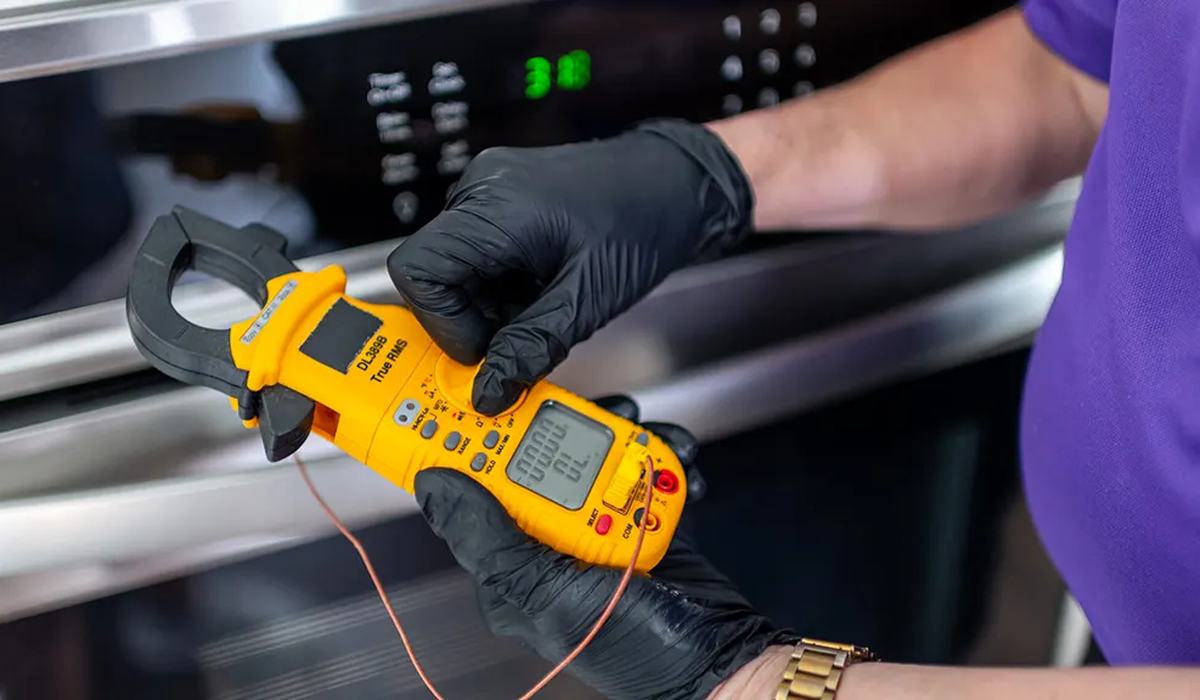
CAT III 600V Digital Multimeter
Rated for 240 V appliance outlets, with true-RMS AC voltage and a 600 V CAT III safety rating. The right meter for a dryer outlet.
Check Price on Amazon →Reading the results
| Test | Expected | If it is wrong |
|---|---|---|
| Hot to hot | ~240 V | 120 V = one leg dead; 0 V = breaker off or outlet failed |
| Hot 1 to neutral | ~120 V | 0 V = that leg is dead |
| Hot 2 to neutral | ~120 V | 0 V = that leg is dead |
| Hot to ground (4-prong) | ~120 V | 0 V = ground fault |
| Neutral to ground (4-prong) | ~0 V | Higher = wiring fault |
A reading of 120 V hot-to-hot is the classic “dryer runs but will not heat” signature. It means one of the two breakers feeding the outlet has tripped or failed. Check the panel for a double-pole breaker that is half-tripped.
The apartment angle
- Shared laundry rooms are not yours to open. Test the outlet if you can reach it, then report the symptom.
- In-unit dryers are usually tenant-accessible for the outlet test, but the outlet itself is a landlord repair.
- Half-tripped double-pole breakers are common. A 240 V circuit uses two breakers tied together; one can trip while the other holds.
- Never change a 3-prong outlet to 4-prong yourself. That is a wiring modification and a landlord job.
Mistakes to avoid
- Using a basic meter on 240 V. Use a CAT III 600 V meter.
- Letting the probes touch. Bridging two slots at 240 V causes an arc flash.
- Assuming the dryer is at fault. Test the outlet first — it is the cheaper answer.
- Missing a half-tripped breaker. A 240 V circuit uses two tied breakers; check both.
- Rewiring a 3-prong outlet to 4-prong. That is a modification and a landlord job.
The double-pole breaker
A 240 V circuit uses two breakers tied together by a handle. That handle is not a convenience — it is a safety requirement, so that both legs are disconnected together. But it also means a failure mode you will not see on a 120 V circuit.
One leg can trip while the other holds. The handle may look on, or sit slightly off-centre. The result is a circuit that delivers 120 V instead of 240 V — and an appliance that runs its motor but produces no heat.
- Find the double-pole breaker for the dryer circuit in the panel.
- Push the handle fully to OFF, then firmly to ON. Both legs reset together.
- Re-test the outlet. If hot-to-hot now reads 240 V, the fault was a half-tripped breaker.
If the breaker trips again immediately, stop resetting it. A 240 V circuit that trips on reset has a real fault — a shorted element, a damaged cord, or a wiring fault — and repeated resetting can damage the breaker. That is a professional job.
One more thing worth knowing: a 240 V breaker that is warm to the touch, or that buzzes, is failing. Breakers are not supposed to be warm in normal operation. A warm breaker is a maintenance request, and a specific one.
The dryer cord and plug
If the outlet tests good, the next suspect is the dryer's cord and plug. A dryer cord carries 30 A and it is a common failure point, especially on a dryer that has been moved.
- Inspect the plug for scorching, discolouration or a burnt smell. Any of those means the cord or the outlet has been overheating.
- Check the cord's strain relief where it enters the dryer. A cord that has been pulled will have a damaged jacket there.
- Test the cord for continuity with the dryer unplugged: each prong to its corresponding terminal inside the dryer's connection block.
- Check the terminal block inside the dryer. Loose screws there are a common cause of a dryer that will not heat.
A dryer cord is replaceable, and it is a genuinely tenant-accessible job on an in-unit dryer. The cord must match the outlet type — a 3-prong cord for a 3-prong outlet, a 4-prong cord for a 4-prong outlet. Using the wrong one is a shock hazard, and it is a common mistake when someone moves a dryer between apartments.
If the outlet is a 3-prong type and the dryer has a 4-prong cord, the correct fix is a new 3-prong cord, not an adapter. Adapters for this exist and they are a bad idea: they leave the dryer's ground bonded to the neutral in a way that was never intended for that appliance.
Frequently asked questions
How do I test a dryer outlet with a multimeter?
Why does my dryer run but not heat?
What is the difference between a 3-prong and 4-prong dryer outlet?
Can I test a dryer outlet myself?
What if my dryer outlet reads 0 volts?
Related guides
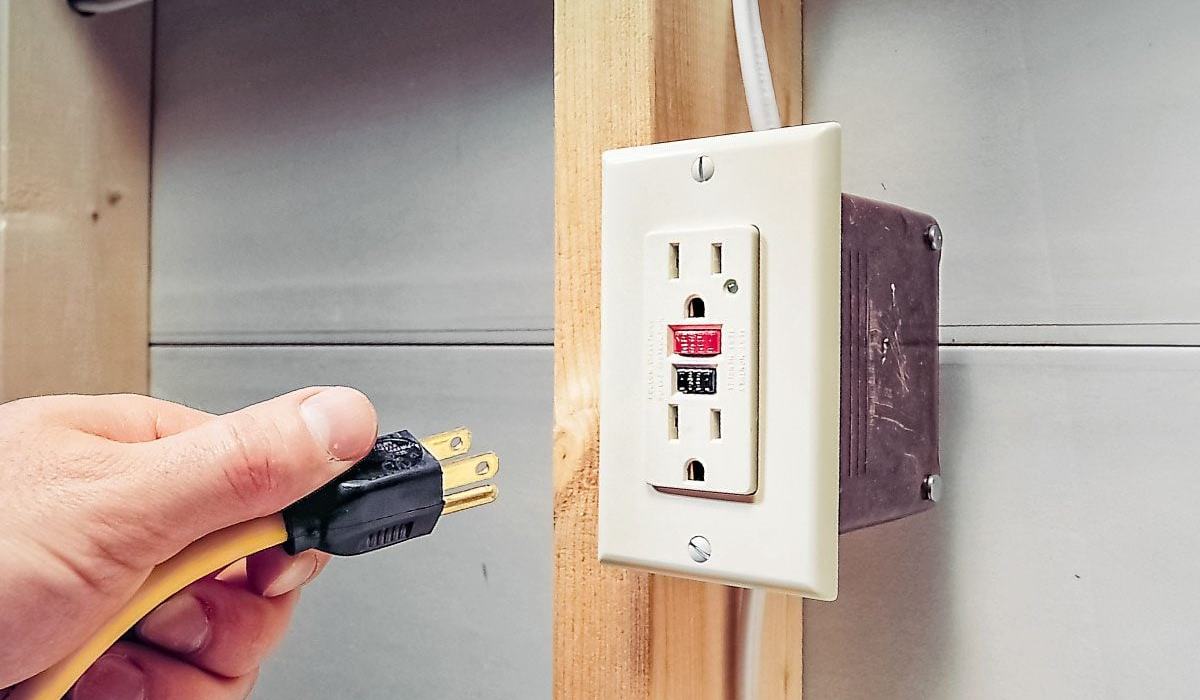
How to Check if an Outlet Is Grounded
The three-reading test that confirms a ground path.
How to Test a Heating Element With a Multimeter
If the outlet is good, test the element next.