A heating element is the simplest part in any appliance: a length of resistance wire that gets hot when current flows through it. That simplicity is good news, because it means one test tells you almost everything.
This guide covers the resistance test, the values to expect for the common apartment appliances, and the ground test that catches the dangerous failure — an element shorted to its own metal case.
On this page
How heating elements fail
There are only two ways an element fails, and they look different on a meter.
- Open circuit — the resistance wire has burned through. The element gets no current and produces no heat. This is the common failure, and it reads as OL (over-limit) on the meter.
- Short to ground — the wire has sagged and touched the metal sheath, or moisture has bridged the insulation. The element may still heat, but it is now a shock and fire risk. This is the dangerous failure.
A third case, a partial short, shows up as a resistance far lower than spec. The element draws too much current, heats unevenly, and usually trips the breaker. If the reading is well below the expected range, replace the element.
Safety first
Heating elements are tested dead, but they live in appliances that run at mains voltage and often at high current. OSHA's electrical safety rules and NFPA 70E both apply: de-energize, verify dead, and only then touch.
- Let the element cool completely — they stay hot for a long time.
- Photograph the wiring before you disconnect anything.
- Discharge any capacitor in the appliance before working near it.
The resistance test
- Unplug the appliance and confirm it is dead.
- Access the element and disconnect at least one wire from it. Testing in circuit lets the meter find a path around the element and gives a false reading.
- Set the meter to resistance (ohms), starting at the lowest range.
- Touch the probes together — you should read close to 0 Ω. This confirms the meter and leads.
- Touch one probe to each element terminal.
- Read the value and compare it to the expected range below.
What the numbers should be
| Appliance | Typical element resistance | Open = failed |
|---|---|---|
| Water heater (upper/lower) | 5–25 Ω | OL |
| Electric dryer element | 8–20 Ω | OL |
| Oven bake element | 10–30 Ω | OL |
| Oven broil element | 10–30 Ω | OL |
| Dishwasher heating element | 10–30 Ω | OL |
| Space heater element | 10–50 Ω | OL |
These are guides, not gospel. The exact value depends on the element's wattage and the supply voltage. What matters is the pattern: a finite low reading is good, OL is dead, and a reading near zero is a short.
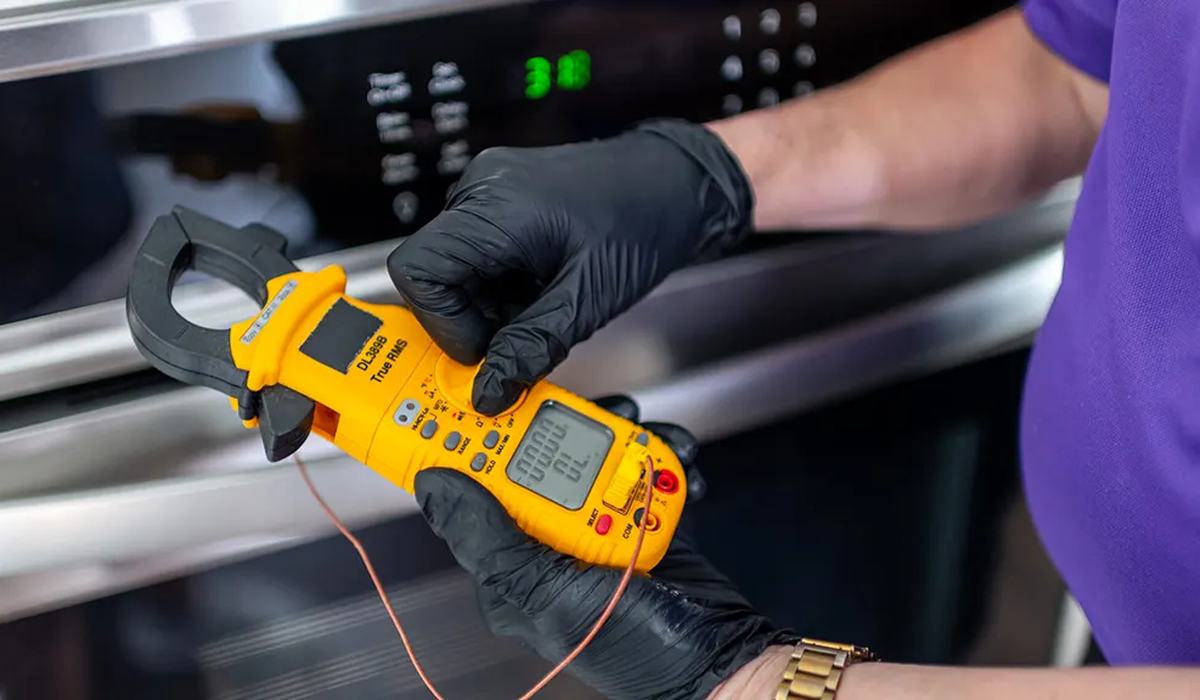
Auto-Ranging Digital Multimeter
Auto-ranging ohms, continuity beeper and a backlit display. Reads element resistance accurately down to a fraction of an ohm.
Check Price on Amazon →The ground test
This is the test most people skip, and it is the one that matters for safety. It checks whether the element's internal wire has touched its metal case.
- Leave the meter on resistance, on the highest range (megohms if available).
- Touch one probe to an element terminal and the other to the bare metal sheath or the appliance chassis.
- The reading should be OL — no connection at all.
- Repeat for the second terminal.
Any finite reading between a terminal and the case means the element is shorted to ground. Replace it. A shorted element can energize the appliance's metal body, which is exactly the shock hazard the ground wire exists to prevent.
The apartment angle
The appliances that use heating elements are the ones renters most often cannot replace outright.
- Water heaters are almost always the landlord's. You can test the element to prove the fault, but replacing it is a maintenance job — and a good diagnosis gets it fixed faster.
- Dryers in shared laundry rooms are not yours to open. Test the outlet instead, and report the symptom.
- Ovens and dishwashers are usually tenant-accessible for a like-for-like element swap, and the part is cheap.
- Space heaters are yours, and a failed element means replace the unit, not the element.
Mistakes to avoid
- Testing in circuit. Disconnect one wire, or the meter finds a path around the element.
- Not zeroing the meter. Touch the probes together first. A stretched lead can add an ohm or more.
- Skipping the ground test. A shorted element is the dangerous failure, and it is invisible to the resistance test.
- Testing a hot element. Heat changes resistance and can burn you.
- Replacing the element without finding the cause. A dry-fired water heater element will fail again if the tank is not full.
Checking the element's wattage
Resistance and wattage are two views of the same thing, and you can use one to check the other. The relationship is:
Watts = Volts² ÷ Ohms
So a 240 V, 4,500 W water heater element should read about 12.8 Ω (240 × 240 ÷ 4500). A 240 V, 5,000 W dryer element should read about 11.5 Ω. If you measure a resistance that implies a much higher wattage than the appliance is rated for, the element is partially shorted and will overload the circuit.
| Appliance | Typical wattage | Expected resistance at 240 V |
|---|---|---|
| Water heater element | 4,500 W | ~12.8 Ω |
| Dryer element | 5,000 W | ~11.5 Ω |
| Oven bake element | 2,500 W | ~23 Ω |
| Dishwasher element | 1,200 W | ~48 Ω |
This calculation is useful when you do not know the element's spec. Measure the resistance, work out the implied wattage, and compare it to the appliance's rating plate. A big mismatch in either direction is a fault.
One caveat: resistance changes with temperature. A cold element reads lower than a hot one. Always test cold, and treat the calculated wattage as an approximation rather than an exact figure.
Replacing an element
If the element has failed, replacement is usually straightforward — and usually cheap. The part is the least expensive component in most heating appliances.
- Unplug the appliance and confirm dead.
- Photograph the wiring before you disconnect anything.
- Note the part number from the element or the appliance's rating plate. Element part numbers are specific to the model.
- Disconnect the wires and remove the mounting screws or clips.
- Fit the new element with a new gasket if one is supplied. A reused gasket leaks.
- Reconnect the wires exactly as photographed, and torque the terminals snugly — loose terminals arc and overheat.
- Test before reassembling: measure the new element's resistance and its isolation to the case.
For a water heater, the critical step is refilling the tank before restoring power. An element that is energized in air will burn out in seconds — this is called dry fire, and it is the single most common cause of a failed water heater element. Open a hot tap and let it run until water flows steadily before you turn the breaker back on.
In a rental, a water heater element is a landlord repair. An oven or dishwasher element is often a tenant-accessible swap. Either way, the diagnosis is the same, and a specific diagnosis is what gets the repair done.
Frequently asked questions
How do I test a heating element with a multimeter?
What resistance should a heating element read?
What does OL mean on a multimeter?
Can a heating element be bad and still show continuity?
Why did my water heater element burn out?
Related guides
How to Test Continuity With a Multimeter
The 30-second beep test behind every electrical diagnosis.
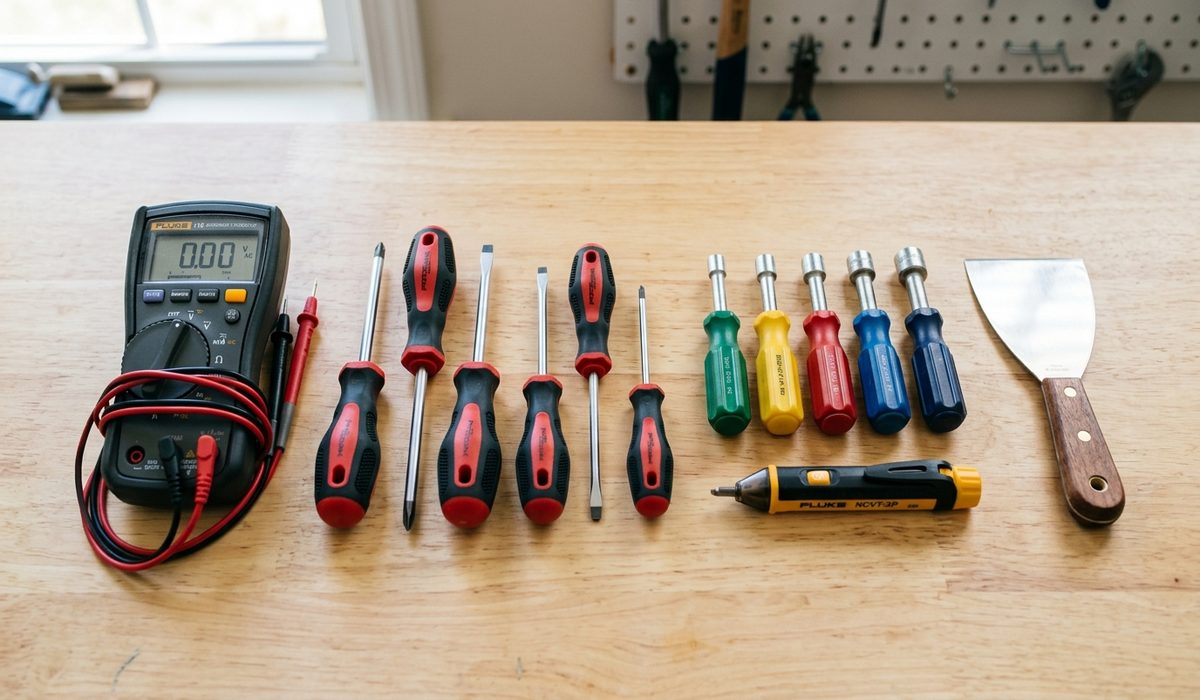
How to Test an Appliance With a Multimeter
The full diagnostic sequence, start to finish.