On this page
What your landlord is required to provide
Housing codes in most countries require a bathroom to have adequate ventilation. What counts as adequate varies: in some places an openable window is enough, in others a mechanical extractor fan is required for a windowless bathroom. A sealed bathroom with neither is almost always a defect the landlord is responsible for.
The practical test is simple. Ask yourself: can this room dry itself out? If there is no fan and no window, the answer is no, and the moisture has to go somewhere — into the walls, the ceiling and your belongings.
How to ask (and get a result)
Landlords respond to documentation, not complaints. Follow this order.
- Photograph everything — the ceiling, the walls, the grout, any existing mould, and the absence of a fan or window.
- Send an email, not a text or a phone call. Subject line: Bathroom ventilation — repair request.
- State the problem plainly: the bathroom has no exhaust fan and no openable window, so moisture cannot escape.
- Describe the consequence: condensation, damp smell, and early mould growth.
- Ask for a specific fix — an extractor fan installed and ducted outside — and a reasonable deadline, usually 14–30 days.
- Keep a copy of the email and any reply.
That email is also your evidence if the deposit is ever disputed. It proves you reported the problem and the landlord knew.
Fixes you can make without permission
These require no drilling, no wiring and no permanent change to the property.
| Fix | What it does | Reversible? |
|---|---|---|
| Portable dehumidifier | Pulls litres of water out of the air | Yes — unplug and take it |
| Squeegee | Removes water before it evaporates | Yes |
| Refillable moisture absorber | Absorbs ambient damp in small spaces | Yes |
| Window fan (if a window exists) | Pushes damp air outside | Yes |
| Damp-trap refill tubs | Low-cost backup in cupboards | Yes |
No-drill options that leave no trace
If you want something that looks like a fan without the installation, a ductless recirculating fan can be mounted with adhesive strips or a tension pole. Be realistic about what it does: it filters and circulates air but does not remove moisture, so it is a comfort fix, not a ventilation fix.
For actual moisture removal, the dehumidifier is the only renter-friendly option that genuinely works in a sealed room. A small unit with a 1–2 litre tank is enough for a typical bathroom if you empty it after each use.
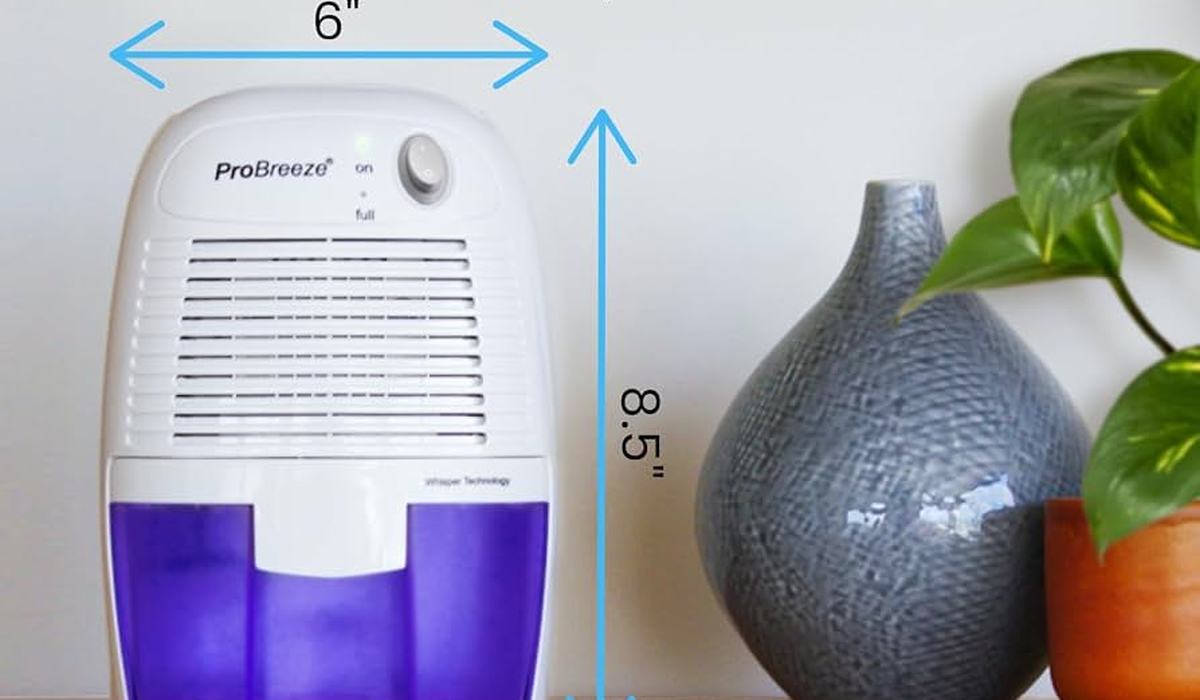
Small Portable Dehumidifier
A compact unit sized for a bathroom or closet. Auto shut-off when the tank fills, and quiet enough to run while you get ready.
Check Price on Amazon →Protecting your deposit
Mould and damp damage are among the most common deposit deductions. Your defence is a paper trail.
- Move-in photos of the bathroom, dated, showing the lack of ventilation.
- Your written report to the landlord, with the date.
- Your mitigation — receipts for a dehumidifier, photos of the room kept dry.
- A move-out clean that removes surface mould and leaves the room dry.
If you can show the bathroom had no ventilation and you reported it, a deduction for mould is much harder for a landlord to justify.
If the landlord refuses
Escalation is a ladder. Climb it in order.
- Follow up in writing and give a final deadline.
- Contact your local housing authority or property standards department and request an inspection.
- Get advice from a tenants' rights organisation about repair-and-deduct or rent withholding rules in your area.
- Consider a formal complaint if the property is licensed or regulated.
When to consider moving
Some buildings simply cannot be fixed — a windowless internal bathroom in a block with no ducting is a structural problem, not a maintenance one. If the landlord will not act and the mould keeps returning despite your efforts, the health cost of staying may outweigh the hassle of moving. Document everything either way, so the decision is based on evidence rather than frustration.
How to tell whether your fix is working
You cannot manage what you do not measure. A cheap hygrometer turns "it feels damp" into a number you can act on.
| Reading | What it means | Action |
|---|---|---|
| Under 50% | Dry and healthy | Nothing needed |
| 50–60% | Slightly damp | Squeegee and ventilate |
| 60–70% | Mould risk begins | Run the dehumidifier daily |
| Over 70% | Active mould risk | Dehumidify continuously; report to landlord |
Take a reading 30 minutes after a shower, before you run anything. That is your worst case. If it is under 60%, your routine is working.
Seasonal differences
Bathroom moisture is worse in winter, for two reasons. Cold outside air holds less water, so the same shower raises relative humidity more. And windows stay shut, so there is no incidental ventilation.
- Winter: run the dehumidifier longer, and open a window briefly even when it is cold — a short purge exchanges air without cooling the room much.
- Summer: humidity is often already high outdoors, so opening a window can make things worse. Use the dehumidifier instead.
- Shoulder seasons: the easiest time to ventilate — use windows freely.
What to document as a renter
If you ever need to escalate, a paper trail decides the outcome. Keep:
- Dated photos of the bathroom on move-in day, including the ceiling and any existing mould.
- A copy of your written report to the landlord, with the date sent.
- Receipts for any equipment you bought to mitigate the problem.
- Hygrometer readings, if you have them, showing the room above 60%.
- Photos of the room kept clean and dry, showing you did your part.
That file is what turns "the tenant let it get mouldy" into "the landlord was told and did nothing".
Frequently asked questions
Can my landlord refuse to install a bathroom fan?
Can I install a fan myself in a rental?
Will a dehumidifier stop mould in a rental bathroom?
What if my bathroom has a window but no fan?
Can I be charged for mould caused by no ventilation?
Related guides
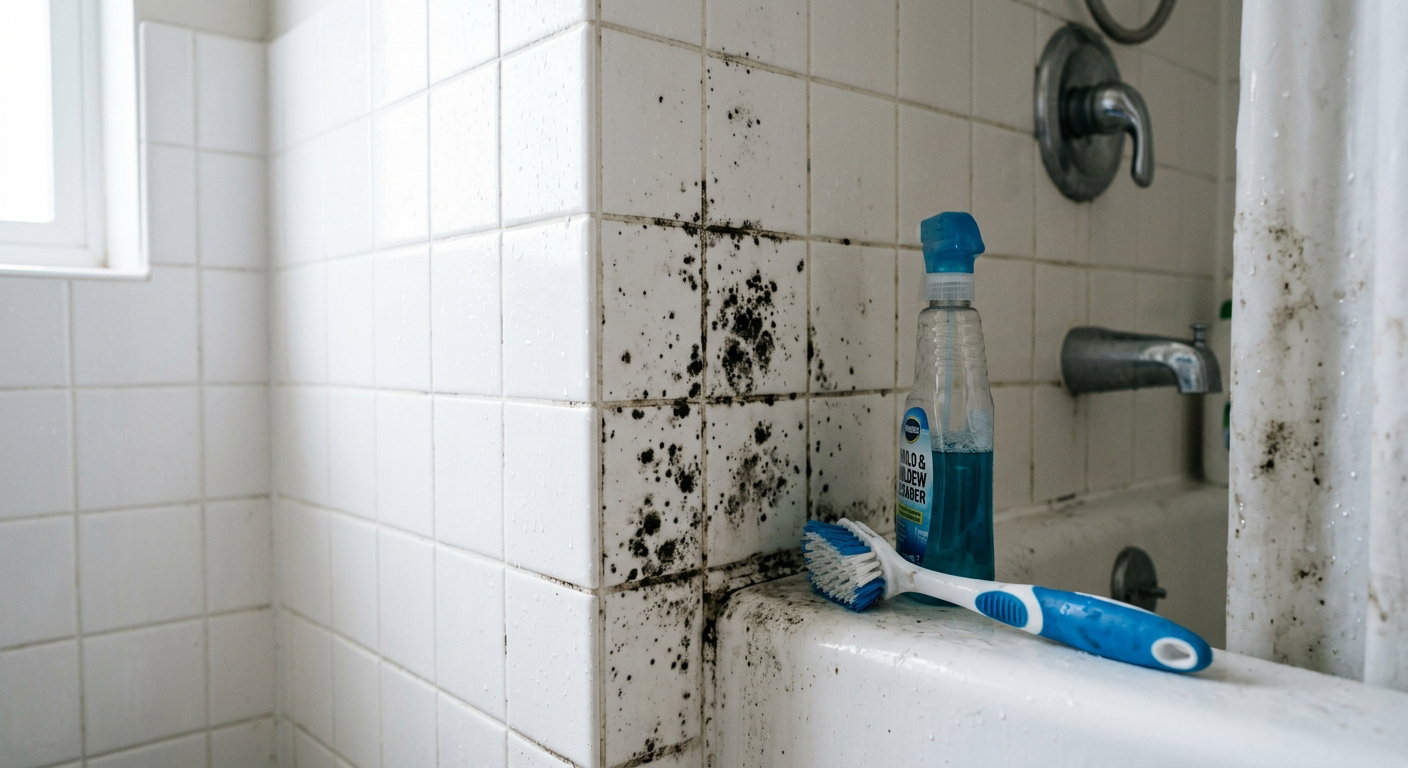
No Exhaust Fan in Your Bathroom? What to Do
The full renter guide to fixing a bathroom with no ventilation.
Renter-Friendly Bathroom Fans You Can Install Today
No-drill fans and the honest limits of each type.

No Ventilation in Your Apartment? How to Fix It
What to do when the whole flat has poor airflow.