On this page
Why a small unit is usually right
Dehumidifier advice online is written for basements, and it pushes people toward 50-pint machines. A bathroom is a completely different problem. It is small, the moisture load is short and intense rather than continuous, and there is rarely a free square metre of floor to spare.
A 25-pint compact unit and a 50-pint unit dry the same 40 sq ft bathroom to the same level. The difference is speed and headroom. For a single bathroom used by one or two people, the compact unit reaches the target within the 30-minute window and costs less, weighs about half as much, and fits under a sink or beside a toilet. That is the right trade for a renter.
The capacity figures themselves follow the AHAM dehumidifier test standard — 80 °F at 60% relative humidity — which is why a unit's real-world output in a cool apartment bathroom is lower than the number on the box. Size with that in mind rather than taking the label at face value.
| Bathroom size | Capacity | Tank size to look for | Approx. weight |
|---|---|---|---|
| Under 40 sq ft (en-suite) | 20–22 pints/day | 1–1.5 L | 12–16 lb |
| 40–60 sq ft (standard) | 22–25 pints/day | 1.5–2 L | 16–22 lb |
| 60–80 sq ft | 25–30 pints/day | 2–3 L | 22–28 lb |
| Also drying laundry | 30–35 pints/day | 3–4 L | 28–35 lb |
Sizing a vent-free bathroom
A vent-free bathroom is a special case because the moisture has nowhere to go except out through the door. That matters for two reasons.
First, the room stays damp for longer, so the unit has to hold the air dry rather than just knock down a peak — but a 30-minute run still handles it if you keep the door shut.
Second, and more important, a vent-free room is fighting its own surfaces. With no air exchange, water that condensed on the mirror, the tiles and the towel rail stays in the room and re-evaporates. This is why a vent-free bathroom needs a squeegee more than it needs a bigger dehumidifier. Removing surface water before you start is worth more than adding 10 pints of capacity.
Compressor vs desiccant vs Peltier
There are three technologies sold as "small dehumidifiers" and only two of them are worth buying for a bathroom.
| Type | Water removal | Works below 60 °F? | Best for |
|---|---|---|---|
| Compressor | High | Poorly | Warm bathrooms |
| Desiccant | High, stable | Yes | Cold or unheated bathrooms |
| Peltier / thermoelectric | Very low | Poorly | Closets and cabinets only |
Peltier units deserve a warning. They are the tiny, cheap, silent boxes sold as "mini dehumidifiers" and they remove very little water — often only a few ounces a day. They are excellent for a wardrobe, a gun safe or a boat locker. They will not dry a bathroom, and buying one for that job is the most common wasted purchase in this category.
What to buy
Three profiles cover almost every vent-free bathroom. Pick by your bathroom's temperature, not by price.
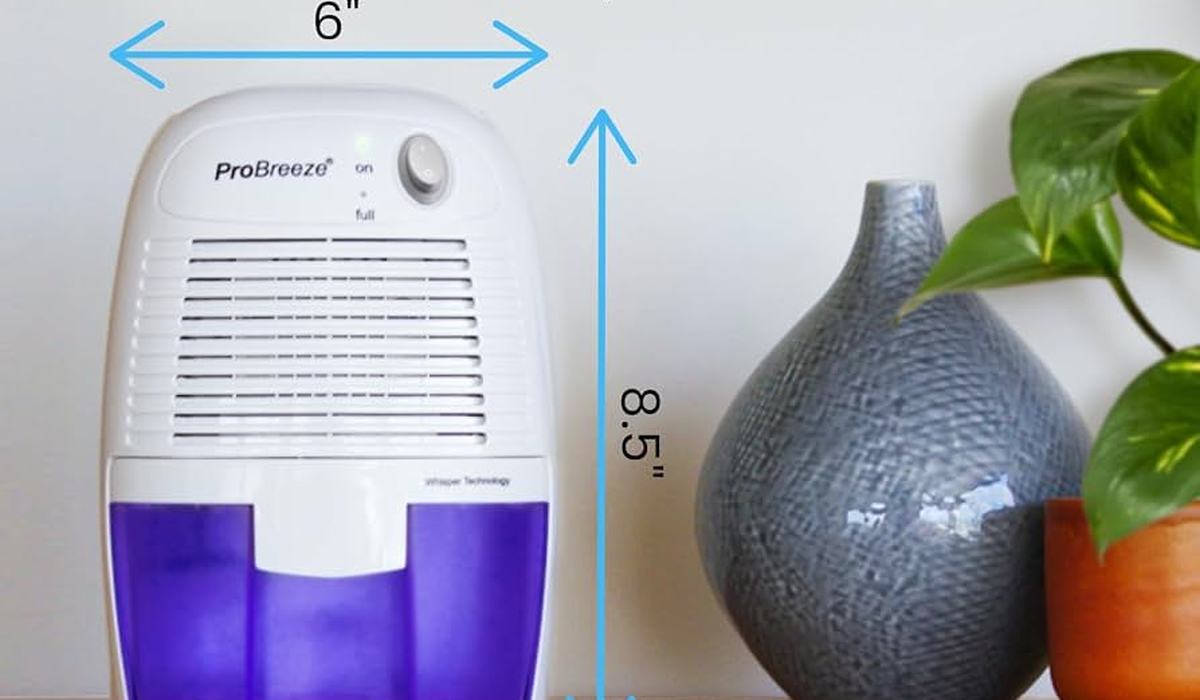
Compact Compressor Dehumidifier (22–25 pint)
The default pick for a warm bathroom. Small enough to live beside a toilet, big enough to dry a standard bathroom in half an hour.
Check Price on Amazon →Desiccant Dehumidifier (for cold rooms)
Buy this instead if the bathroom is unheated in winter. It keeps its capacity where a compressor unit stops working, though it draws a little more power.
Check Price on Amazon →Dehumidifier With Hose & Pump
Worth the premium if you cannot gravity-drain into a shower tray. The built-in pump pushes condensate upward into a sink so the unit can run unattended.
Check Price on Amazon →The setup that makes a small unit work
A small unit beats a big one when the surrounding setup is right. Everything below costs under $40 combined.
- A squeegee. Removes the water that would otherwise become vapour. This single item changes the arithmetic more than any capacity upgrade.
- A plastic tray. Lifts the unit off wet tile and catches drips. Also makes it easy to slide out when you empty the tank.
- A hygrometer. Confirms the run actually worked. Without one you are guessing.
- A clip-on or window fan. Covers the odour and air-exchange job the dehumidifier cannot do.
- A microfibre towel on the floor by the shower. Cheap, and it captures splash before it becomes humidity.
The one spec people get wrong
Almost everyone compares units on pints per day. The spec that actually decides whether a small unit is usable in a bathroom is tank size relative to run length.
Work it out before you buy. A 25-pint unit removes roughly 1–1.5 pints per hour in a warm bathroom, so a 30-minute run produces around 0.5–0.75 pints. A 1 L (2.1 pint) tank therefore covers several runs before it needs emptying, which is fine. A 0.5 L tank on a compact Peltier unit fills fast and shuts the unit off mid-run, which is why those units appear to do nothing.
| Spec | What to check | Why it matters |
|---|---|---|
| Capacity | 20–30 pints/day | Must beat the shower load inside 30 minutes |
| Tank size | 1.5 L or more | Too small and it auto-shuts mid-run |
| Auto shut-off | Yes, with a light | Prevents overflow and tells you to empty it |
| Operating range | Check the low end | Compressor units drop off below 60 °F |
| Drain option | Hose port, or pump | Turns a daily chore into nothing |
| Noise | Under 45 dB | A bathroom is an echo chamber |
Keeping it working long-term
A bathroom is a hard environment for a machine: high humidity, dust from towels, and constant cycling. Three habits keep a compact unit working for years.
- Clean or rinse the filter monthly. A clogged filter on a small unit causes a disproportionate loss of capacity because there is no spare airflow to lose.
- Empty and dry the tank between uses if it will sit idle. Standing water in a warm bathroom grows biofilm, and biofilm smells.
- Give it a rest. Do not leave a compact unit running 24/7 in a bathroom. It is built for intermittent duty, and continuous running in a humid room shortens compressor life noticeably.
Frequently asked questions
What size dehumidifier do I need for a bathroom without a vent?
Are mini dehumidifiers worth it for a bathroom?
Do I need a desiccant dehumidifier for a vent-free bathroom?
How much water should a small bathroom dehumidifier collect?
Can I leave a small dehumidifier running all night in a bathroom?
What else do I need besides the dehumidifier?
Related guides
Best Dehumidifier for a Bathroom Without a Vent
Top picks compared for sealed, fanless bathrooms.
Dehumidifier for a Bathroom Without a Vent: What Works
The mechanics of drying a sealed room.
Do Dehumidifiers Work in Bathrooms? Real Numbers
How much water they pull and when they stop working.