On this page
The shared-air problem
In a house, a nursery is a closed box. In a small flat, the “nursery” is often a corner of the bedroom, and that bedroom shares air with the living room, the kitchen and the front door. Three consequences follow.
- Air from the kitchen reaches the baby. Frying, toasting and roasting all produce fine particulate matter. A purifier in the bedroom corner will eventually catch it, but only after it has spread through the flat.
- Odours from neighbours arrive. In a shared building, cooking smells travel through shared walls, stairwells and poorly sealed services. Only an activated carbon layer addresses them.
- A single purifier is doing the work of several. You are not filtering 80 sq ft; you are filtering everything the flat's air touches.
The fix is not to buy four purifiers. It is to size for the air volume the unit can actually reach, and to place it where that air converges — typically the point where the bedroom area meets the corridor or living space.
Sizing for a small flat
Apply the two-thirds CADR rule, but to the whole area served, not the cot's corner.
| Flat layout | Air to size for | Target smoke CADR | Unit class |
|---|---|---|---|
| Studio, cot in the main room | Whole flat | 2/3 of total floor area | Mid to large tower |
| 1-bed, cot in the bedroom, door shut | Bedroom only | 2/3 of bedroom area | Compact to mid tower |
| 1-bed, cot in the bedroom, door open | Bedroom + living room | 2/3 of both areas combined | Mid-size tower |
| 2-bed flat, cot in the small room | That bedroom | 2/3 of bedroom area | Small to compact tower |
| Cot in the living room | Whole living area | 2/3 of living area | Mid to large tower |
The door is the deciding variable, and it is free to control. Closing the bedroom door at night shrinks the volume the purifier must handle and reduces the size you need to buy. It also reduces noise transmission into the rest of the flat. In a small home, a closed door is the cheapest air-quality upgrade available.
Safety around a crawling baby
Once a baby is mobile, every floor-level object becomes a climbing frame, a tipping hazard and a cord to pull. Four rules cover it.
- Stable base, floor level, against a wall. A tall narrow tower in the middle of an open floor is the worst combination. Put it against a wall and consider a low-profile unit.
- Cord out of reach, secured, not loose. Route it behind furniture and use an adhesive cord cover. The AAP's safe-sleep guidance is about the sleep space, but the same logic applies to any cord a baby can reach at floor level.
- Child lock on, if the unit has one. A crawling baby will find the buttons and change the fan speed at the least convenient moment.
- Intake grille not reachable by small fingers. Most units have a fine grille that prevents this, but check before trusting it. Avoid any model with a large open intake.
Noise in a one-room setup
Small flats make noise harder to escape. When the cot is in the same room as the bed, both adults and baby are exposed to whatever the purifier produces.
The parameters are the same as any nursery: aim for a low speed under 25 dB, run a fixed night mode rather than auto, and place the unit as far from both sleep surfaces as the room allows. In a studio flat that distance might only be six to eight feet, which is still worth roughly 6 dB compared with putting it beside the bed.
| Situation | Practical measure |
|---|---|
| Cot and bed in one room | Place the unit in the far corner, outlets aimed along the wall |
| Hard floor in a rented flat | Cork or rubber mat underneath to cut structure-borne noise |
| Neighbour below | Move the unit off the party wall and onto a mat |
| Baby is a light sleeper | Fixed low speed, display off; avoid auto mode |
| Adults are light sleepers | Same measure; a steady low fan is easier to ignore than bursts |
Placement in a tight footprint
Three placements work in a small flat, in rough order of effectiveness.
1. The corner where the sleeping area meets the living space
If the air circulates between the two, this is the convergence point and the most efficient single position. Aim the outlet into the larger space so the airflow loops through both.
2. Against an interior wall, away from the cot and the bed
Good when the rooms are genuinely separate. An interior wall also avoids adding noise to a party wall.
3. Beside the door, outlet facing into the room
The right choice in a studio where there is no free corner. It sets up a short circulation loop and keeps the unit out of the walking path.
What does not work: the middle of the floor (a trip and tipping hazard), under a window you open (you are filtering air you are about to replace), and in a cupboard or alcove (starved airflow).
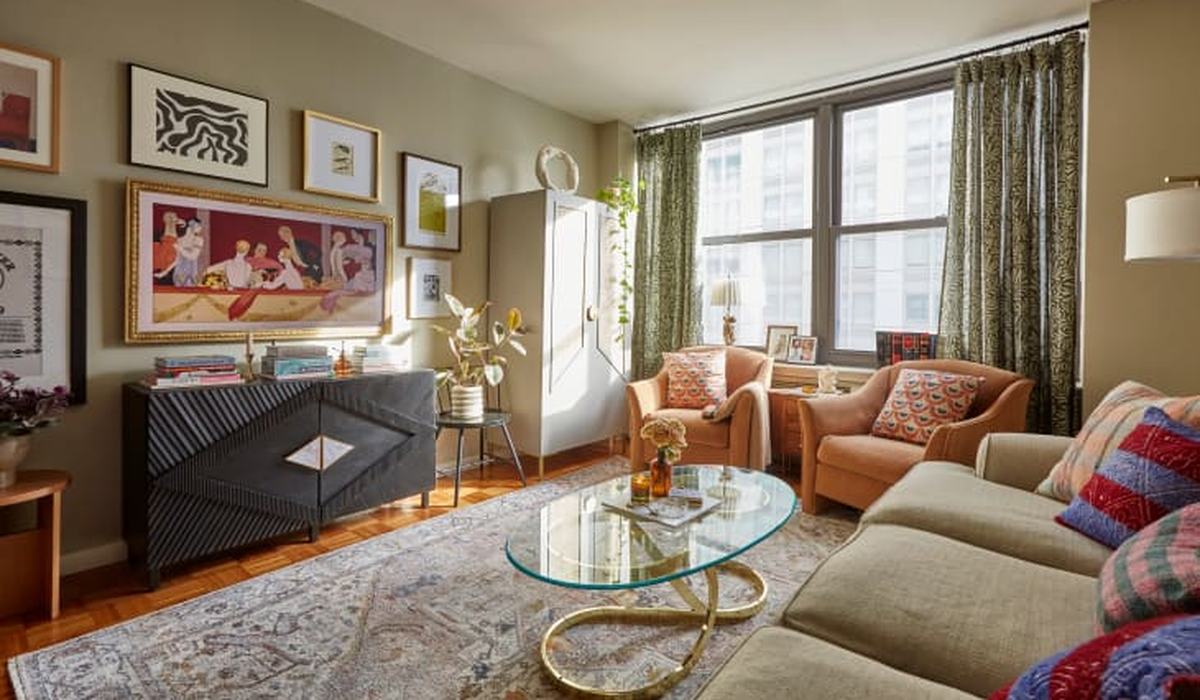
Small-Footprint Unit With Child Lock
A low profile, stable base and a child lock make this the safer shape when a baby is crawling. Check the smoke CADR against the whole area it will serve, not just the cot's corner.
Check Price on Amazon →Ventilation, cooking and humidity
A purifier filters air; it does not replace air. In a small flat that distinction matters more than in a house, because every activity happens in a confined volume.
- Cooking. Use the extractor hood if there is one, and if it recirculates rather than exhausts, treat it as a filter and replace its charcoal pads on schedule. Where there is no hood, open a window while cooking and run the purifier on a higher speed for fifteen minutes afterwards.
- Ventilation. ASHRAE Standard 62.2 sets the residential ventilation expectation. In a flat, a short cross-flow airing twice a day — ten to fifteen minutes with windows on opposite sides — is the practical version. Do it when the baby is out of the room, then let the purifier catch up.
- Humidity. Small flats concentrate moisture from showers, laundry and cooking. Target 40–50% relative humidity; above roughly 60% you are inviting mould, and a purifier will not fix that. A hygrometer is a few dollars and settles the question.
- Laundry. Drying clothes indoors raises humidity sharply in a small volume. If you must, ventilate while it dries rather than after.
The complete small-flat kit
| Piece | Job | Roughly |
|---|---|---|
| Mid-size true-HEPA + carbon purifier | Particles and odours across the sleeping area | $130–250 |
| Cork or rubber mat | Stops vibration reaching a neighbour below | $10–20 |
| Adhesive cord cover | Keeps the cord away from a crawling baby | $10–15 |
| Hygrometer | Tells you whether humidity is the real problem | $10 |
| Removable window weatherstrip | Cuts what gets in from the road or next door | $15–35 |
| Spare filter (on the shelf) | Guarantees the unit keeps working | $25–60 |
Total around $200–390, all of it portable. Nothing here needs a hole in a wall, and every piece moves to the next flat. The principle is to solve particles with the purifier, odours with carbon, moisture with ventilation and measurement, and noise with placement and a mat.
Sources: AHAM (CADR certification program), U.S. EPA (Residential Air Cleaners guide; ozone generator warning), ASHRAE Standard 62.2 (residential ventilation), WHO Environmental Noise Guidelines (night-time bedroom levels), American Academy of Pediatrics (safe sleep and cord safety).
Frequently asked questions
- air purifier for a baby — related guide in this cluster.
- best air purifier for a nursery — related guide in this cluster.
Do I need an air purifier in a small apartment with a baby?
What size air purifier do I need for a one-bedroom flat with a baby?
Where should I put an air purifier with a baby in a small flat?
Is one big air purifier better than two small ones in a small flat?
How do I stop the neighbour below hearing my air purifier?
Should I open windows if I have an air purifier in a small flat?
Related guides
Quiet Air Purifier for a Nursery: The Complete Renter's Guide
The full nursery setup guide.
Air Purifier for Renters: No Drilling, No Damage
The complete renter-safe setup and cost maths.