On this page
- What “quiet” actually means on a spec sheet
- Real dB numbers for nursery purifiers
- Sizing: CADR and air changes for a nursery
- Baby-safe features: ozone, ionizers and cords
- Where to put it in a nursery (renter-safe)
- Noise versus airflow: the speed trade-off
- The picks: quiet purifiers for nurseries
- Apartment and renter realities
- Where to go next
What “quiet” actually means on a spec sheet
Every purifier box carries a reassuring number. The problem is that the number is measured at the lowest fan speed, with the unit switched to whatever mode the manufacturer calls sleep, at a distance the manufacturer does not always state. It is not dishonest, but it is not the number you will experience at 3 a.m. either.
Three things decide whether a claim of “24 dB” means anything for a nursery:
- Which speed the figure belongs to. A unit that is 24 dB on speed 1 is often 38 dB on speed 2 and 51 dB on turbo. The low number tells you about the low speed only.
- The measurement distance. Sound pressure falls about 6 dB every time you double the distance from the source. A figure taken at 1 foot is roughly 6 dB louder than the same unit at 2 feet, and about 9–10 dB louder than at 3 feet. A nursery placement of six feet from the crib turns a 30 dB claim into something closer to 24 dB in practice — which is why placement is as useful as shopping.
- Whether it is a sound-power or sound-pressure figure. Manufacturers quote sound pressure (dB-A) because it flatters them. Sound power is always the larger, equivalent number.
Two independent certifications are worth looking for. AHAM verifies CADR independently, which is the only trustworthy measure of cleaning power. Energy Star does not cover noise, but the rated wattage at low speed gives you an indirect hint: a unit rated to draw 2–3 W on low is almost certainly operating a near-silent fan.
Real dB numbers for nursery purifiers
For reference, a quiet bedroom at night sits around 30 dB, a whisper is about 30 dB, a soft refrigerator hum is 40 dB and normal conversation is 60 dB. The WHO Environmental Noise Guidelines put the recommended night-time average in a bedroom near 30 dB, with effects on sleep becoming measurable above about 40 dB.
Here is what the numbers on nursery-class purifiers actually translate to:
| Rated noise (low speed) | What it sounds like | Sleeps beside it? | Typical unit class |
|---|---|---|---|
| 20–24 dB | Barely audible; you hear the air, not the motor | Yes, comfortably | Small true-HEPA, 100–150 CADR |
| 25–29 dB | Soft, steady air movement | Yes, for most people | Small to mid true-HEPA |
| 30–34 dB | A quiet fridge hum | Usually, if 3+ ft away | Mid-size unit on low |
| 35–39 dB | Noticeable hum | Only at a distance | Mid-size on speed 2 |
| 40–50 dB | Conversation level | No | Large unit on high |
A purifier running continuously at 26–28 dB is doing something a purifier at 45 dB is not: it can stay on all night. Given that the point of a nursery purifier is continuous filtration while a baby sleeps, a slightly noisier unit that gets switched off is worse than a quieter one that never stops.
Sizing: CADR and air changes for a nursery
Noise is the constraint that pushes you small. Cleaning power is the constraint that pushes you large. Reconcile them with CADR.
CADR (Clean Air Delivery Rate) is the volume of filtered air a unit delivers per minute, broken down into smoke, dust and pollen figures. The long-standing AHAM rule of thumb for a room you actually want clean is:
A small nursery is often 8 × 10 ft. That is 80 sq ft, so look for a smoke CADR around 55–80. If the room is 10 × 12 ft (120 sq ft), aim for 80–120. Note this is close to twice the tiny “small room” purifiers sold for desks.
| Nursery size | Floor area | Target smoke CADR | Typical noise at that size |
|---|---|---|---|
| 7 × 9 ft | 63 sq ft | 45–65 | 22–27 dB |
| 8 × 10 ft | 80 sq ft | 55–80 | 23–28 dB |
| 10 × 12 ft | 120 sq ft | 80–120 | 25–32 dB |
| 12 × 14 ft | 168 sq ft | 110–170 | 28–36 dB |
| Open studio (shared) | 250 sq ft | 165–250 | 30–40 dB |
If you want the arithmetic rather than the rule of thumb, air changes per hour (ACH) is the underlying quantity:
ACH = (CADR × 60) ÷ room volume
An 8 × 10 ft room with an 8 ft ceiling holds 640 cubic feet. A purifier with a 100 CFM smoke CADR gives (100 × 60) ÷ 640 ≈ 9.4 air changes per hour, which is excellent for a bedroom. Four to five changes an hour is the usual minimum for meaningful particle reduction; below about two you are mostly moving dust around.
A related point: also hold the nursery's ventilation at the level ASHRAE Standard 62.2 expects for a bedroom. A purifier recirculates air; it does not replace outside air. Closing a nursery's only window and relying on a purifier alone will not manage CO2 or chemical off-gassing, so a short daily airing still matters.
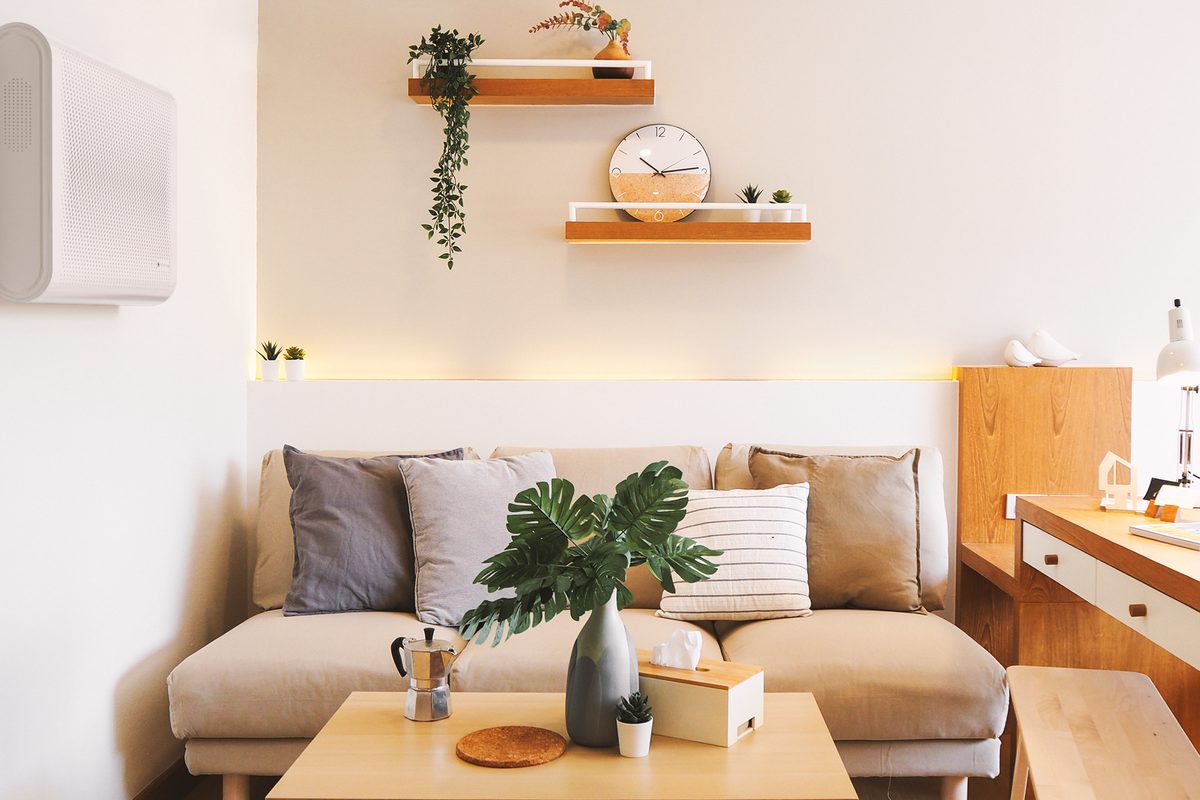
True HEPA Purifier for a Small Nursery
The sweet spot for a nursery: true HEPA plus a carbon layer, room-appropriate CADR, and a low speed that stays near 24 dB. Add a filter subscription so replacements are not forgotten.
Check Price on Amazon →Baby-safe features: ozone, ionizers and cords
Three safety questions to settle before the unit comes through the door.
Does it produce ozone?
Ozone generators are sold as air cleaners and are a bad idea in any room with an infant. The U.S. EPA's residential air cleaner guidance is explicit that ozone generators are safe only when operated within levels set by public health standards, and that they do not remove most indoor contaminants even as they add ozone — a known lung irritant. Avoid any product that advertises an “ozone mode”, “activated oxygen” or “ionizing sterilization” in a nursery. A plain mechanical HEPA plus carbon unit is what you want.
What about an ionizer?
Bipolar ionizers and some electrostatic units can generate small amounts of ozone as a by-product. Models carrying a California Air Resources Board (CARB) certification and an ozone output below the 0.05 ppm limit are the ones to consider, or simply switch the ionizer off if the unit allows it. In a nursery, off is the safe default.
Cords
The American Academy of Pediatrics' safe-sleep guidance is built around a clear sleep space: nothing in the crib, and nothing within reach that can wrap, tangle or be pulled. A purifier cord is exactly that kind of object. Route it behind furniture, out of the crib's radius, and secure it with a cord cover or a cable clip stuck to the skirting (adhesive, not a screw). The unit itself belongs outside the crib, outside the reach of a standing toddler, and never balanced on a shelf above the sleep space.
Where to put it in a nursery (renter-safe)
Placement buys you free decibels and better cleaning. Everything below works without drilling.
| Do | Do not |
|---|---|
| Place it on the floor or a low surface, 3–6 ft from the crib | Place it within arm's reach of the crib or on a high shelf |
| Give the intake 12–18 in of clearance on all sides | Push it flat against a wall or into a corner |
| Aim the outlet along the room, not at the crib | Blow the airstream directly onto the sleep space |
| Run the cord behind furniture with a cable cover | Leave a loose cord looping across the floor |
| Use a small rug or mat under it to cut floor vibration | Set it directly on a hollow wooden floor beside a shared wall |
| Keep it away from curtains and fabric | Let fabric touch the intake grille |
For renters specifically: nothing here needs a wall mount. Stud-finder and wall-bracket purifiers are for owners. A free-standing unit on the floor is both the quietest option and the only one that will not cost you a deposit.
Noise versus airflow: the speed trade-off
The single biggest mistake people make with a nursery purifier is running it in auto mode overnight. Auto mode responds to a particle sensor. In a bedroom that means it will ramp up when a door opens, when sheets are shaken, or when the sensor sees a dust plume — and the ramp-up is usually to speed 2 or 3, which is where the noise lives.
Night mode keeps the fan pinned low. That is the mode to use while a baby sleeps, because a steady low level is far less likely to wake a light sleeper than a fan that surges and drops.
| Mode | Behaviour overnight | Noise | Best for |
|---|---|---|---|
| Sleep / night mode | Fan fixed at lowest speed, display off | 20–26 dB | Night, every night |
| Auto mode | Ramps up on sensor events | Variable, 24–45 dB | Daytime or an empty room |
| Turbo / high | Maximum airflow | 45–55 dB | Airing out before the baby comes in |
| Fan-only | No auto control, no sensor | Low on low | When you want predictable sound |
The picks: quiet purifiers for nurseries
Two shapes of unit cover the nursery job: a compact true-HEPA tower for a small bedroom, and a mid-size unit if the nursery shares space with the rest of the flat.
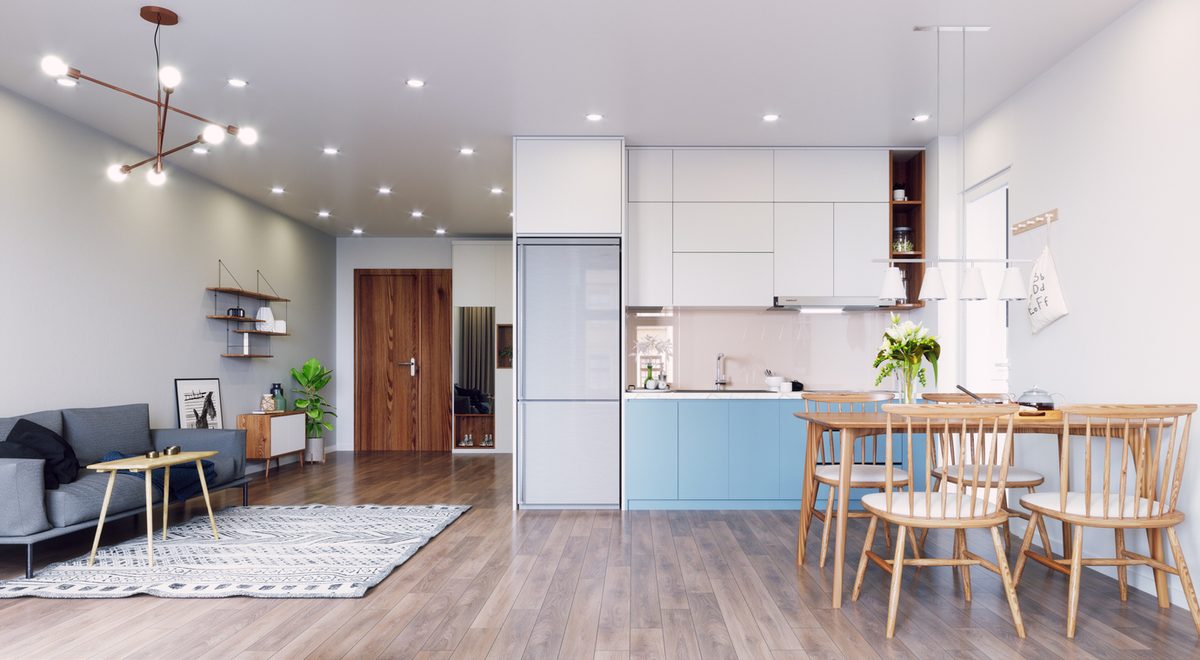
Compact Quiet Tower for Small Nurseries
The smallest footprint of the quiet group. Good CADR for a bedroom up to about 120 sq ft, a night mode that genuinely dims the display, and a filter that is cheap to replace.
Check Price on Amazon →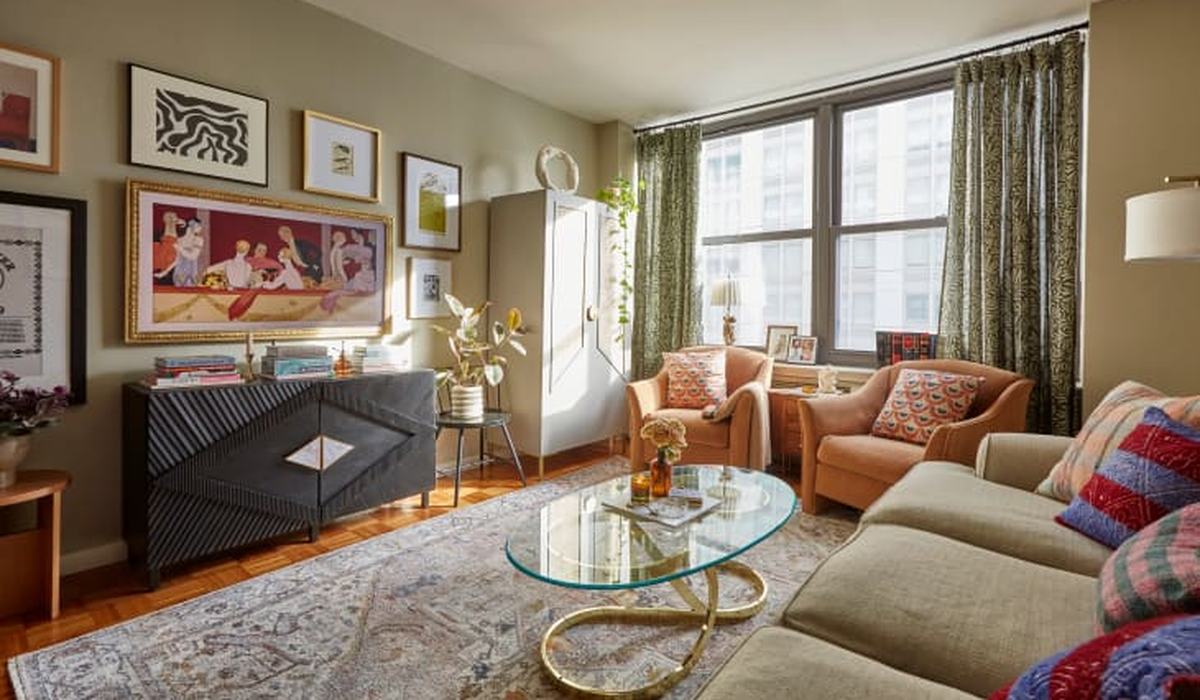
Mid-Size Unit for Open Nurseries
Choose this shape if the nursery opens onto a living area. Higher CADR means you can run it on speed 1 — quieter — and still turn the room over.
Check Price on Amazon →Apartment and renter realities
Four things change when the nursery is in a rental flat rather than a house.
- Thin walls and shared floors. Sound travels through a party wall and through the floor structure as much as through the air. A unit sitting directly on a hard floor above a neighbour's bedroom transmits vibration. A cork or rubber mat underneath decouples it and is the cheapest upgrade you can make.
- No drilling. Free-standing is not a compromise for renters, it is the correct answer. Nothing needs anchoring, and the unit moves with you.
- Small footprint. In a flat where the nursery doubles as a storage room, a tower that fits a 10 × 10 in footprint matters more than a marginally higher CADR.
- Filter storage. Buy two spare filters and stack them flat under the crib base or on a closet shelf. Two per year is the usual cadence for continuous running.
The combined message is simple: a nursery purifier is a low-noise, correctly sized, free-standing unit run on night mode, decoupled from the floor, with nothing loose near the crib. Get those five things right and the brand matters much less than the setup.
Where to go next
If you are still narrowing down, these are the guides that pick up where this one leaves off:
- Air purifier without light for a nursery — for cot-side darkness and light-blocking that is renter-safe.
- Quiet air purifier for thin walls — if the concern is the neighbour rather than the baby.
- What size air purifier for a nursery — the CADR and air-changes maths, worked.
- Best quiet air purifier for a nursery — the picks, ranked by low-speed noise.
- Quietest air purifier for a baby room — the same picks ranked purely by silence.
- Air purifier decibels explained — what the number on the box actually means.
- How loud is a 24 dB air purifier? — the claim tested against real rooms.
- Air purifier white noise for baby — safe or not, and at what volume.
- Air purifier for a baby apartment — the small-flat version of this guide.
- Air purifier for renters — placement that needs no permission.
- Air purifier with no drilling — rental-safe mounting options.
- What CADR means on an air purifier — the one metric worth trusting.
- Best air purifier for a small apartment — room-appropriate picks for compact flats.
- Best air purifier under $100 — the budget path if you need to stay low.
- Air purifier noise levels explained — the speed-by-speed decibel picture.
- Best air purifier for a nursery — the three-tier shortlist that passes the safety checks.
- Air purifier for a baby — safety-first selection for a newborn.
- Baby-safe air purifier — ozone, CARB and cord checks in full.
- Ozone-free air purifier — how to read the label correctly.
- Quiet air purifier for an apartment — when the neighbour is the concern.
- Levoit air purifier for a nursery — model tiers matched to room size.
- Air purifier for a nursery under $100 — what survives the budget.
- Small air purifier for a nursery — footprint-first picks for tight rooms.
- Where to put an air purifier in a nursery — the six-step placement method.
- How long to run an air purifier in a nursery — runtime and energy cost.
Sources: AHAM (CADR certification program), U.S. EPA (Residential Air Cleaners guide; ozone generator warning), ASHRAE Standard 62.2 (residential ventilation), WHO Environmental Noise Guidelines (night-time bedroom levels), American Academy of Pediatrics (safe sleep and cord safety).
Frequently asked questions
How quiet should an air purifier be for a nursery?
What size air purifier do I need for a nursery?
Can I leave an air purifier on all night in a baby's room?
Are ionizers and ozone generators safe in a nursery?
Should I use auto mode or sleep mode overnight?
Does an air purifier replace opening a window in a nursery?
Related guides
Air Purifier Noise Levels Explained (dB by Speed)
What the decibel figures actually mean, speed by speed.
Air Purifier Without Light for Nursery: Total-Darkness Guide
Running a purifier with no glow at all in a nursery.
Best Air Purifier for Sleep: Quiet Picks Rated by dB
Which units stay quiet enough to sleep beside.