On this page
The four rules of renting and air quality
Renting changes the air-quality problem in four specific ways, and each one has a matching rule.
- You cannot modify the building. No wall mounts, no in-duct filters, no drilling a fresh-air vent. So: buy only free-standing equipment.
- You cannot rely on the building's ventilation. A rental often has a bathroom fan that has never been cleaned, a kitchen extractor that recirculates rather than exhausts, and windows that were painted shut two tenants ago. So: assume the flat needs help, and verify rather than assume.
- You may be on the wrong side of the building. Facing a road, above a restaurant, under a flight path. So: size the purifier for your exposure, not just the room, and run it on a schedule that matches when the air is worst.
- You will move. Anything you buy has to survive a move and fit a different room. So: prioritise portability over maximum CADR, and avoid anything sized to one specific flat.
What to buy (and what to avoid)
The core purchase is simple: one free-standing true-HEPA purifier with an activated carbon layer, sized to the largest room you are likely to occupy.
The carbon layer matters more for renters than the marketing suggests. Rental flats concentrate odour sources you do not control: a neighbour's cooking, a shared stairwell, older carpets, paint, and sometimes a kitchen extraction system that blows straight back into the flat. HEPA captures particles; only carbon addresses gases and smells.
| Buy | Avoid | Why |
|---|---|---|
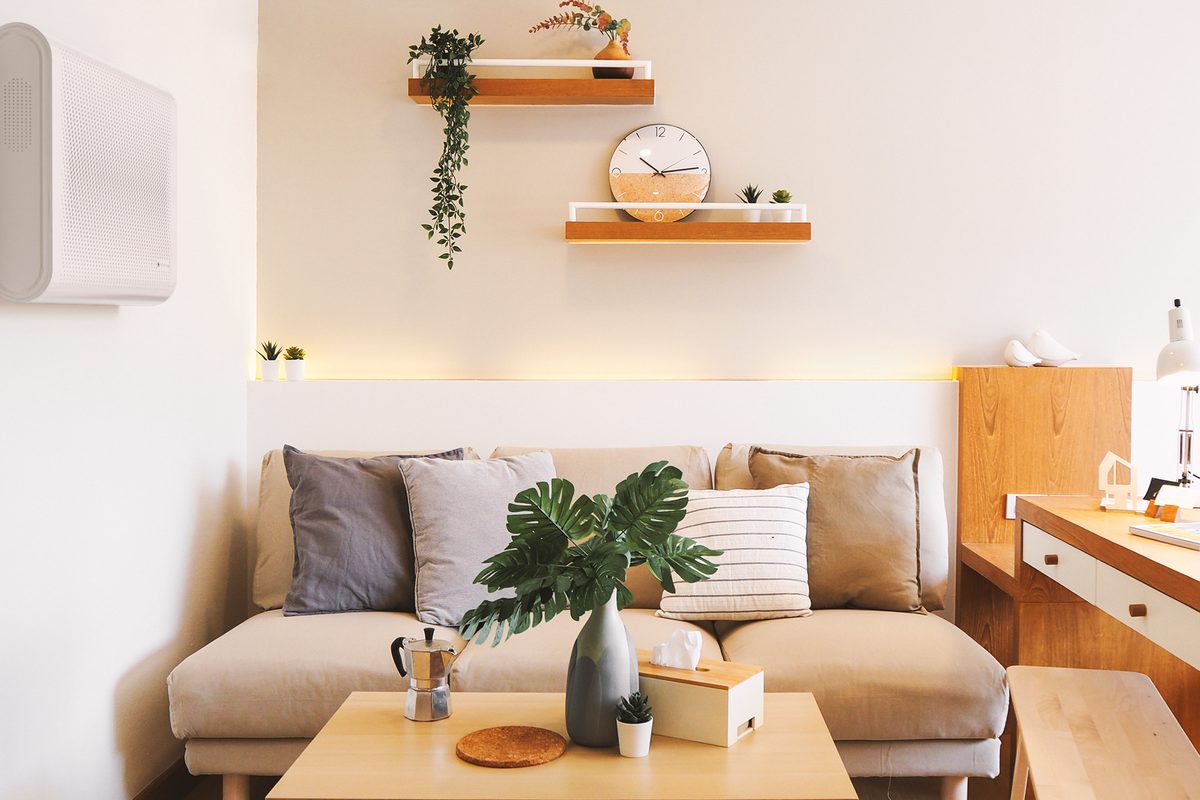
| Free-standing true-HEPA tower | Wall-mounted purifiers | No drilling; mounting needs landlord consent |
| HEPA plus activated carbon | Ionizer-only or ozone models | EPA warns against ozone generators in occupied rooms |
| Unit with a genuine night mode | Units whose only low-noise claim is on the box | You will run it overnight, so the low speed is the one that counts |
| Filter you can buy easily for 3+ years | Units with hard-to-source cartridges | A purifier without filters is a fan |
| Removable window-seal tape | Screw-fixed draught strips | Adhesive seals come off cleanly at the end of a tenancy |
| Cork or rubber decoupling mat | (nothing under a hard-floor unit) | Cuts structure-borne noise into the flat below |
Where to put it in a rental
Placement in a rental has one extra constraint: you have to leave the walls and floors exactly as you found them.
- Floor placement, always. A unit on the floor needs no anchor. A unit on a shelf above head height is a tipping hazard and usually a bad idea regardless of the tenancy.
- Away from the window you will open. If the purifier sits directly under the window you use for airing, you are filtering air as fast as you are replacing it with outside air. Alternate: air out for ten minutes, then run the purifier.
- Off the shared wall and on a mat. In a flat, sound and vibration travelling into the neighbouring unit is a real source of complaints. A mat under the unit is the fix.
- Clear of the radiator. Warm air rising over a purifier intake confuses its particle sensor and can distort its auto readings.
- Cord routed with adhesive clips only. Command-style clips and cable trunking come off cleanly. Screw-fixed cable clips do not.
Sealing a draughty window without screws
If the flat lets in traffic fumes, pollen or a neighbour's smoke through a poorly fitting window, you have a choice between filtering constantly or reducing what gets in. The second is cheaper.
| Method | Renter-safe? | Effectiveness | Reversibility |
|---|---|---|---|
| Removable weatherstrip tape | Yes | Good on gaps up to ~5 mm | Peels off; may leave light residue |
| Adhesive foam draught strip | Yes | Good on wider gaps | Peels off cleanly |
| Magnetic secondary glazing sheet | Yes | Very good | Fully removable, reusable |
| Shrink-film window insulation | Yes | Good; double-sided tape | Tape removes with care |
| Silicone sealant | No | Excellent | Damages paint and frames |
| Screw-fixed brush strips | No | Excellent | Leaves screw holes |
A note on the trade-off: sealing a window hard will also seal in moisture. Kitchens and bathrooms need a route for humid air out, so seal the bedroom and living-room windows if traffic or smoke is your problem, and leave a bathroom window or vent working. Otherwise you trade a fume problem for a condensation and mould problem, which is a worse trade.
What the landlord is responsible for
Renting does not mean accepting everything. Certain things are the building's problem, not yours, and no purifier compensates for them.
- Ventilation that does not work. A bathroom with a fan that runs but moves no air, or a sealed internal bathroom with no extract at all, is usually a defect. ASHRAE Standard 62.2 sets the residential ventilation expectation, and a purifier is not a ventilation substitute.
- Water damage and damp. Mould from a leaking roof, pipe or failed window seal is a repair item. A purifier filters spores from the air but does not fix the water.
- A heating system producing combustion by-products. If a gas appliance is not venting correctly, that is a safety matter and an immediate repair request, not an air-quality project.
- Building-wide works. If the corridor is being sanded or painted, that dust is temporary, but the landlord should be managing it.
Put requests in writing, describe the observable problem rather than the diagnosis, and keep using your own setup in the meantime. Do not let the room go damp while you wait.
The true cost over three years
The purchase price is roughly half the story. Filters and electricity are the rest.
| Item | Typical cost | Cadence |
|---|---|---|
| True-HEPA purifier (mid-size) | $130–250 | Once |
| Replacement filter | $25–60 | Every 6–12 months |
| Electricity (10 W average, all night) | $8–15/year | Annual |
| Decoupling mat | $10–20 | Once |
| Window seal (removable) | $15–35 | Once per flat |
| Three-year total | $280–520 | — |
Put in that light, the filter subscription is not an upsell — it is the difference between an appliance that works for three years and one that quietly stops working after eight months because the filter was never changed.
Free-Standing True-HEPA Unit for Rentals
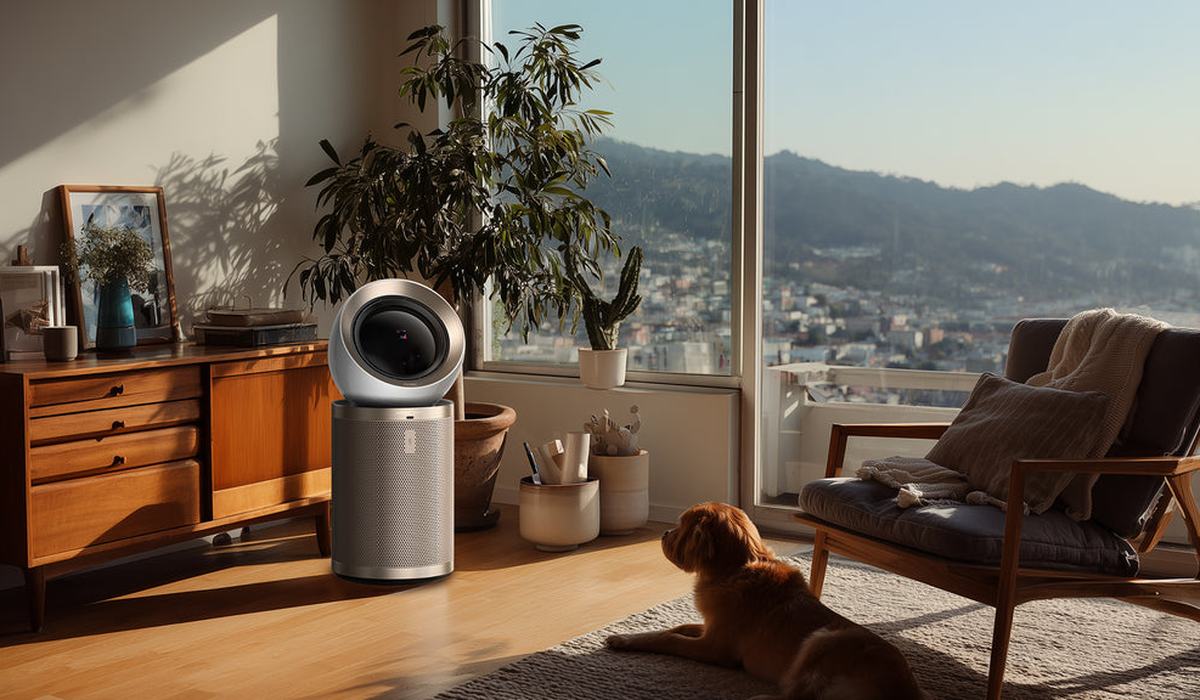
No mounting, no installation, no damage. True HEPA plus carbon for the odour problems that come with shared buildings, and a filter that is stocked everywhere.
Check Price on Amazon →What happens when you move
A properly renter-oriented setup is almost entirely portable, which is the point.
- The purifier travels in the car and needs no particular room shape.
- The mat rolls up.
- Adhesive seals come off before the final inspection.
- The current filter travels with the unit; the next replacement is bought in the new city.
The only item worth reconsidering is the unit's size. If you are moving from a studio into a house share, a mid-size unit sized for a small flat is still correct. If you are moving the other way — from a bedroom into an open-plan — you will want the larger class, and the old unit becomes the second unit for the bedroom. That is another argument for buying the standard sizes rather than anything bespoke.
Everything here comes down to one design principle: choose equipment that assumes you will not be allowed to change the building, and that assumes you will carry it out again.
Sources: AHAM (CADR certification program), U.S. EPA (Residential Air Cleaners guide; ozone generator warning), ASHRAE Standard 62.2 (residential ventilation), WHO Environmental Noise Guidelines (night-time bedroom levels), American Academy of Pediatrics (safe sleep and cord safety).
Frequently asked questions
- quiet air purifier for an apartment — related guide in this cluster.
- nursery placement that needs no drilling — related guide in this cluster.
Can I use an air purifier in a rental apartment?
What is the best air purifier setup for a renter?
Can I seal a draughty window in a rental?
Is my landlord responsible for poor ventilation?
How much does an air purifier cost over three years?
Will an air purifier get rid of cooking smells from next door?
Related guides
Quiet Air Purifier for a Nursery: The Complete Renter's Guide
The nursery version of this setup, start to finish.
Air Purifier No Drilling Rental: Renter-Safe Options
Every mounting-free option in one place.
Where to Place an Air Purifier in a Small Apartment
The placements that work in a small flat.