On this page
Why flats are a harder noise problem
Two things make an apartment different from a house for noise.
First, the rooms are small, so the unit sits closer to the people it disturbs. Sound pressure falls about 6 dB every time you double the distance from the source. In a house you might be 15 feet away in the next room; in a studio flat you might be four feet away on the floor.
Second, and more importantly, you share structure. A purifier sitting directly on a hard floor transmits vibration into the floor slab. That slab is the ceiling of the flat below. A fan that sounds like nothing in your room can arrive next door as a low hum that is harder to ignore than the airborne noise itself.
What the decibel figures mean
| Level | What it sounds like | Sleep impact |
|---|---|---|
| 20–24 dB | Barely audible; you hear air, not a motor | Negligible |
| 25–29 dB | Soft steady airflow | Negligible for most people |
| 30–34 dB | A quiet fridge hum | Low, if 3+ ft away |
| 35–39 dB | A noticeable hum | Disturbs light sleepers |
| 40–49 dB | Continuous background sound | Measurable sleep effects |
| 50 dB+ | Conversation level | Disrupts sleep |
The WHO Environmental Noise Guidelines put the recommended night-time average in a bedroom near 30 dB, with effects on sleep becoming measurable above about 40 dB. The AAP's nursery guidance is more permissive for white noise, at or below 50 dB, but that is a ceiling, not a target.
Per-speed noise, not a single number
The figure on the box is the lowest fan speed. It is rarely the figure you will live with.
| Speed | Typical range | When it runs | Neighbour risk |
|---|---|---|---|
| Speed 1 / sleep | 20–26 dB | All night | Low, if decoupled from the floor |
| Speed 2 | 32–40 dB | Daytime, cooking, dust | Audible through a party wall |
| Speed 3 / turbo | 45–55 dB | Airing out only | Clearly audible next door |
| Auto mode | Variable, 24–48 dB | Whenever the sensor fires | Unpredictable — the worst option overnight |
The practical rule: if you need speed 2 to clean the room, you bought a unit one size too small. Sizing up lets you achieve the same air changes at the quietest setting.
How sound crosses a shared wall
There are two paths, and they need two different fixes.
- Airborne. Fan noise travels directly through the partition. A stud wall with a single layer of plasterboard on each side attenuates far less than a masonry wall. The fix is distance: every doubling of distance from the wall is roughly 6 dB less arriving on the other side.
- Structure-borne. Motor vibration travels through the floor or wall it is touching, and re-radiates as sound in the neighbour's room. The fix is decoupling: a cork or dense-rubber mat under the unit, and keeping the casing off the wall.
| Unit noise in your room | Distance from the shared wall | Roughly what the neighbour hears |
|---|---|---|
| 25 dB (speed 1) | 6 ft away | Effectively nothing |
| 25 dB (speed 1) | Right against the wall | Faint broadband hum |
| 38 dB (speed 2) | 6 ft away | A soft, audible hum |
| 38 dB (speed 2) | Right against the wall | Clearly audible speech-level masking |
| 50 dB (turbo) | Any distance | Complaint territory |
These are estimates, not measurements — wall construction varies enormously — but the ordering is reliable: distance and decoupling matter more than the brand on the box.
Placement that buys you decibels
| Do | Do not |
|---|---|
| Put it 6–12 in away from a shared wall | Push it flush against the party wall |
| Set it on a cork or rubber mat | Sit it straight on a hard floor above a neighbour |
| Move it away from corners, which amplify low frequencies | Tuck it into the corner nearest the neighbour |
| Keep 12–18 in of clearance around the intake | Box it in behind furniture |
| Aim the outlet along the room | Point the airstream at the wall you share |
| Choose a spot on an interior wall if you can | Place it against the wall you share with the bedroom next door |
None of this needs a drill, a bracket or a landlord's permission. It is all furniture arrangement, which is exactly the kind of change a renter can make and undo.
Modes: sleep, auto and fan-only
Auto mode is the most common cause of neighbour complaints, because it is unpredictable. It ramps up whenever the particle sensor fires: a door opens, sheets move, someone cooks. The neighbour experiences random surges rather than a steady hum.
| Mode | Behaviour | Noise | Verdict for an apartment |
|---|---|---|---|
| Sleep / night | Fan pinned to lowest speed, display off | 20–26 dB | Use this overnight |
| Fan-only / manual | Constant speed you choose | Whatever you set | Best if you want full control |
| Auto | Ramps up on sensor events | 24–48 dB | Avoid at night |
| Turbo | Maximum airflow | 45–55 dB | Daytime only, ideally mid-morning |
The apartment picks
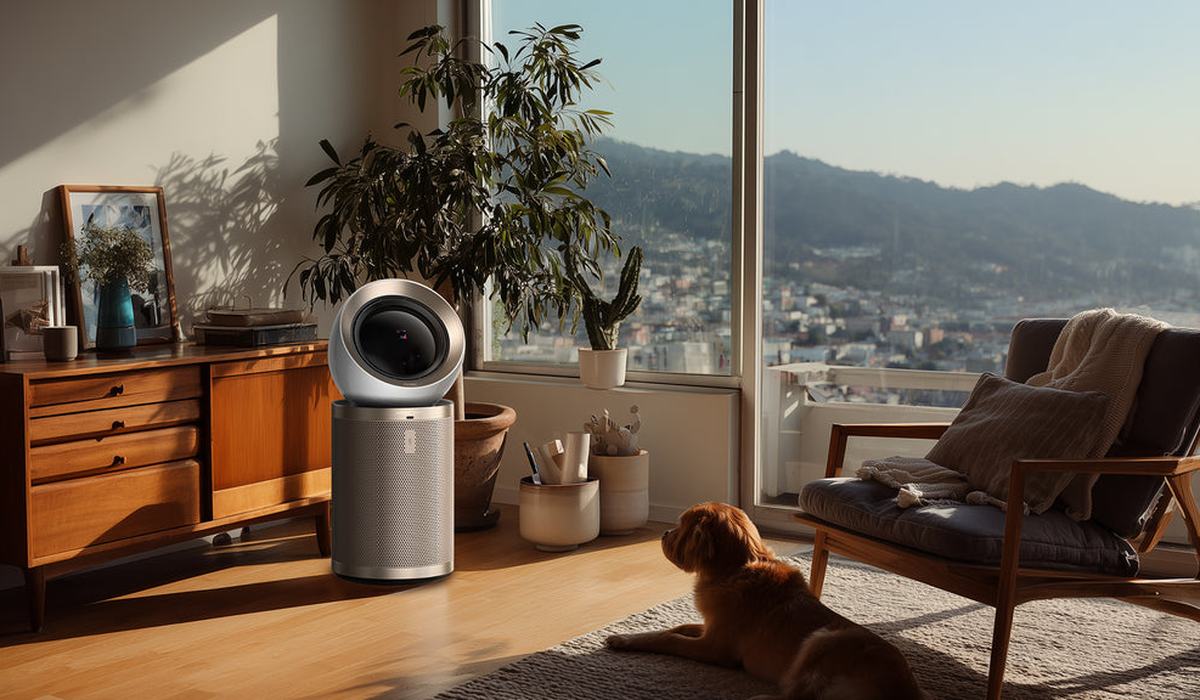
Compact Quiet Unit for a Small Flat
A true-HEPA tower sized for a bedroom or small living area, with a low speed rated near 24 dB and a display you can darken. The safest starting point for a studio or one-bed flat.
Check Price on Amazon →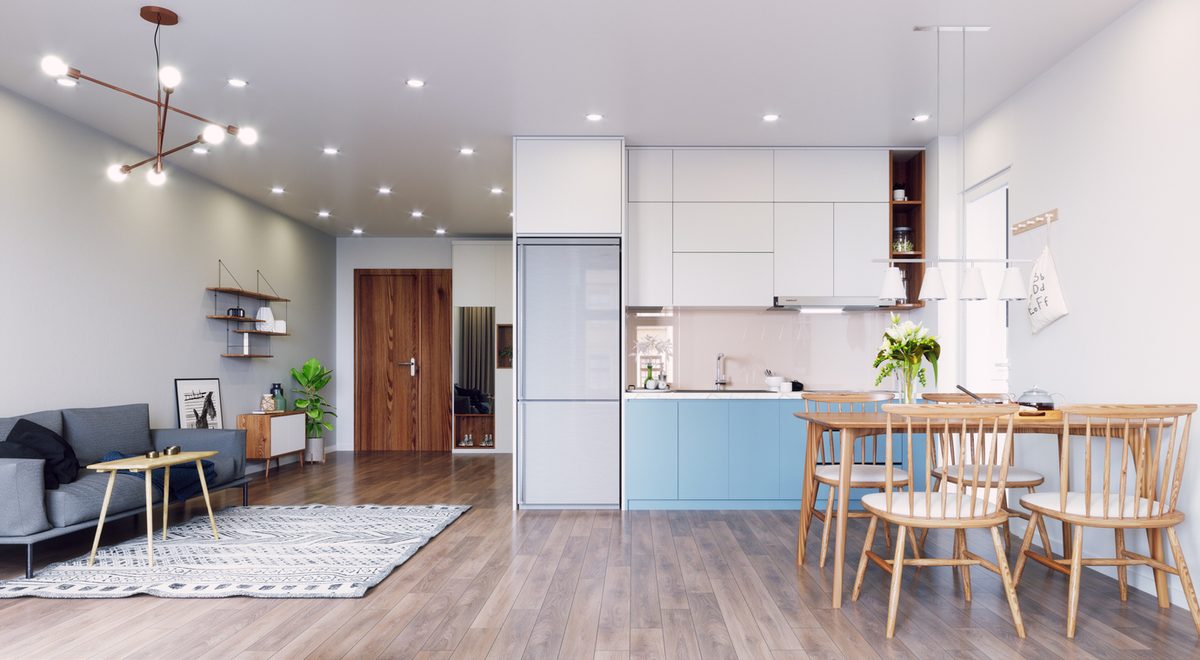
Mid-Size Unit for an Open-Plan Flat
More CADR means you can hold speed 1 all day and still turn the room over. The right answer when the living area and kitchen share air and the unit is nearer a neighbour than you would like.
Check Price on Amazon →Renter rules and lease limits
- Quiet hours. Many leases set quiet hours, commonly 10 p.m. to 8 a.m. A purifier on speed 1 is comfortably inside any reasonable limit; turbo at 2 a.m. is not.
- No drilling. Free-standing is the correct answer for tenants, and it is also the quietest, because there is no bracket to transmit vibration into the wall.
- Deposit safety. A mat under the unit protects the floor finish as well as the neighbour. Nothing is fixed, nothing is marked.
- If you do get a complaint. Move the unit off the shared wall, add a mat, and switch to fan-only at a fixed low speed. Those three changes address both paths — airborne and structural — without buying anything new.
Where to go next
- Quiet air purifier for thin walls — the extreme version of this problem.
- Quiet air purifier for a nursery — the pillar guide, with full per-speed data.
- Air purifier for renters — placement that needs no permission.
- Air purifier noise levels explained — the speed-by-speed picture.
- Air purifier with no drilling — rental mounting options.
- How loud is a 24 dB air purifier? — the claim tested against real rooms.
Sources: WHO Environmental Noise Guidelines (night-time bedroom levels), AHAM (CADR certification program), U.S. EPA (Residential Air Cleaners guide), ASHRAE Standard 62.2 (residential ventilation), American Academy of Pediatrics (night-time sound and safe sleep).
Frequently asked questions
How quiet should an air purifier be in an apartment?
Can neighbours hear my air purifier?
How do I stop my air purifier vibrating through the floor?
Is auto mode bad for an apartment?
Should I buy a bigger air purifier for a quieter flat?
What are typical apartment quiet hours?
Related guides
Air Purifiers for VOCs & Formaldehyde in a New Apartment
New paint, flooring and furniture off-gas VOCs and formaldehyde