On this page
Why a baby's room is different
Adults tolerate a lot of air quality compromise without noticing. Infants have faster breathing rates relative to body weight, narrower airways, and a sleep environment that is deliberately sealed and quiet. The result is a room where a marginal device matters more, and a hazardous one matters more still.
That shifts the buying order. Instead of starting with CADR and working down, start with what must be ruled out, then size, then place.
Check one: ozone output
Ozone is the single feature that turns a purifier from a helper into a hazard. Some units generate it deliberately through an “ozone mode” or “activated oxygen” function. Others generate it as a by-product of a bipolar ioniser or an electrostatic precipitator.
- Reject any listing that mentions an ozone mode, activated oxygen, or ionising sterilisation.
- Prefer a unit with a California Air Resources Board (CARB) certification. That is an independent test that ozone output sits under the 0.05 ppm limit.
- If the unit has an ioniser, switch it off. Most models let you. In a baby's room, off is the default.
Check two: the filter type
| Filter | What it removes | Verdict for a baby |
|---|---|---|
| True HEPA (99.97% at 0.3 microns) | Dust, pollen, smoke particles, pet dander, many airborne bacteria | Essential |
| Activated carbon | Odours, cooking and tobacco VOCs, some formaldehyde | Strongly recommended |
| Washable pre-filter | Hair, lint, larger dust | Useful; extends the HEPA life |
| “HEPA-type” / “HEPA-like” | Undefined | Avoid — no standard applies |
| Ioniser / electrostatic | Charges particles | Off, or avoid |
Carbon matters more than the box suggests. A baby's room in a flat picks up cooking odours, cleaning-product VOCs and, in older buildings, paint and adhesive fumes. Particle filtration alone will not touch those.
Check three: sizing for a crib corner
Use the AHAM two-thirds rule: smoke CADR at least two-thirds of the floor area in square feet. If the crib is in a corner of a shared room, size it to the whole room, because the air is shared.
| Space | Floor area | Smoke CADR | Air changes |
|---|---|---|---|
| Nursery 6 × 8 ft | 48 sq ft | 32–48 | 4–5 ACH |
| Nursery 8 × 10 ft | 80 sq ft | 55–80 | 4–5 ACH |
| Nursery 10 × 12 ft | 120 sq ft | 80–120 | 4–5 ACH |
| Crib corner in a studio | Whole flat (e.g. 400 sq ft) | 270+ (or accept partial coverage) | 2–3 ACH |
Oversizing is safe and often quieter, because a large unit on speed 1 moves more air than a small unit on speed 2 while making less noise. Undersizing is the mistake that costs sleep, because the small unit must run on high to do anything.
Check four: placement and the cord
AAP safe-sleep guidance is built around one idea: a clear sleep space. Nothing in the cot, and nothing within reach that could wrap, tangle or be pulled. A purifier cord is exactly that object.
| Do | Do not |
|---|---|
| Stand it on the floor, 3–6 ft from the cot | Place it in, on or above the cot |
| Route the cord behind furniture with a cover | Leave a loose loop across the floor |
| Leave 12–18 in of clearance around the intake | Push it flat against a wall or into a corner |
| Aim the outlet along the room | Blow the airstream at the sleeping baby |
| Put a mat under it on a hard floor | Sit it on a hollow floor beside a shared wall |
Every item on the left is achievable in a rental without a single hole. Free-standing is not a compromise for tenants — for a baby's room it is the safer configuration, because there is nothing at height to fall.
Check five: light and sound
Two comfort features decide whether the unit stays on.
- Light. A blue status LED is bright enough to disturb a light-sleeping infant. Look for a unit whose display can be switched off completely, not merely dimmed. Our total-darkness guide covers light-blocking that is renter-safe.
- Sound. On low, keep the rated figure at or under 25 dB. WHO's night-time bedroom guidance sits near 30 dB, and the AAP recommends keeping nursery sound at or below 50 dB. A steady low fan is better than an auto mode that surges. More detail in the quiet-nursery pillar.
Baby purifier comparison
| Type | Best for | CADR to look for | Low-speed noise | Footprint |
|---|---|---|---|---|
| Compact true-HEPA tower | Nursery 60–120 sq ft | 55–90 | 20–26 dB | About 8 × 8 in |
| Mid-size true HEPA | Open nursery or studio | 110–160 | 24–28 dB | About 10 × 10 in |
| Budget compact | Nursery 60–100 sq ft | 50–75 | 22–28 dB | About 7 × 7 in |
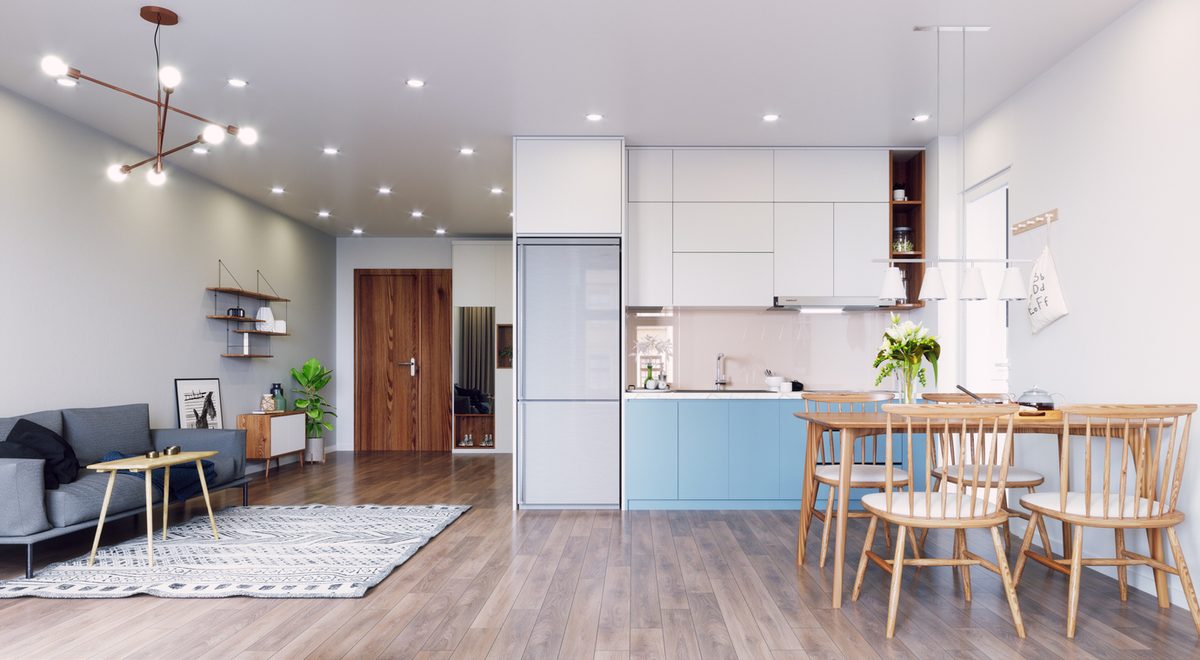
Compact True-HEPA Unit for a Baby's Room
The shape most baby rooms need: true HEPA plus carbon, a display you can darken, and a night mode that holds the fan at its lowest speed. Confirm it has no ozone mode before ordering.
Check Price on Amazon →Renting with a baby
Four constraints matter when the baby's room is in a rented flat.
- No drilling, ever. Wall-mounted units are for owners. A free-standing tower is safer, quieter and deposit-safe.
- Shared walls and floors. A unit sitting directly on a hard floor transmits vibration into the structure. A cork or rubber mat underneath decouples it — the cheapest upgrade you can make, and often the difference between a happy neighbour and a complaint.
- Small footprint. In a flat where the nursery doubles as storage, measure the gap before buying. A unit that does not fit ends up in the hall.
- Storage limits. Buy two spare filters at once and store them flat under the cot base or on a wardrobe shelf. Two per year is the normal cadence for continuous running.
Where to go next
- Baby-safe air purifier — the certification screen, in full.
- Best air purifier for a nursery — the three-tier shortlist.
- Air purifier for a baby apartment — the small-flat version.
- Quiet air purifier for a nursery — the pillar guide.
- Air purifier white noise for baby — safe or not, and at what volume.
- Where to put an air purifier in a nursery — distance from the cot, worked through.
Sources: U.S. EPA (Residential Air Cleaners guide; ozone generator warning), California Air Resources Board (ozone emission certification), AHAM (CADR certification program), American Academy of Pediatrics (safe sleep guidance), WHO Environmental Noise Guidelines (night-time bedroom levels).
Frequently asked questions
Is it safe to run an air purifier all night in a baby's room?
What should I avoid in an air purifier for a baby?
How big an air purifier does a baby's room need?
Do air purifiers help with a baby's dust and allergy symptoms?
Does an air purifier replace ventilation in a nursery?
Which is better for a baby, sleep mode or auto mode?
Related guides