
When a fridge stops cooling, the instinct is to call someone. But the majority of “fridge not cooling” cases come down to something simple — a blocked vent, a worn seal, or dust on the coils — and you can rule those out in under an hour for free.
This guide walks through the seven causes in the order a technician would check them, cheapest and easiest first.
On this page
- 1. Blocked air vent
- 2. Failed door gasket
- 3. Dirty condenser coils
- 4. Failed evaporator fan
- 5. Dead start relay
- 6. Defrost system fault
- 7. Refrigerant leak
- Fridge not cooling but freezer is fine?
- How to test each cause
- How long a refrigerator takes to cool
- When it is your landlord's problem
- Preventing it happening again
- Parts that fix a warm fridge
- FAQ
1. Blocked air vent (check this first)
Cold air moves from the freezer to the fridge through a vent, usually at the back. If you’ve packed the shelves too tightly, that vent gets blocked and the fridge section warms up while the freezer stays fine.
Fix: Pull everything away from the back wall and the vent. Leave a few inches of clearance. This alone solves a surprising number of cases.
2. Failed door gasket
A worn door seal lets warm air in constantly, so the compressor never catches up. It’s the most common cause of a fridge that runs non-stop but never gets properly cold.
Test: Close the door on a dollar bill at four points. If it slides out with no resistance, the gasket is failing.
Fix: Replace the gasket — a $15–$40 part and a 45-minute job. Full step-by-step guide here →
3. Dirty condenser coils
The condenser coils at the back or bottom of the fridge dump heat. When they’re coated in dust and pet hair, they can’t, and cooling efficiency drops sharply.
Fix: Unplug the fridge, pull it out, and vacuum or brush the coils. Do this every 6–12 months. A coil cleaning brush costs under $15 and pays for itself immediately.
Refrigerator Coil Cleaning Brush
A long, flexible brush designed to reach behind and under the fridge. The cheapest efficiency upgrade you can make.
Check Price on Amazon →4. Failed evaporator fan
The evaporator fan circulates cold air from the freezer into the fridge. If it dies, the freezer may still be cold but the fridge section goes warm — and you’ll often hear no fan noise when you open the door.
Test: Open the freezer and listen. If the fan isn’t running (and the door switch is pressed), it’s failed.
Fix: Replace the fan motor — a $25–$60 part. It’s a moderate DIY job; if you’re not comfortable, this is a reasonable point to call a technician.
5. Dead start relay
If the fridge is silent, or clicking every few minutes without the compressor running, the start relay has likely failed. It’s a $10–$30 part and one of the highest-value DIY repairs there is.
Test: Unplug the fridge, remove the relay from the compressor, and shake it. A rattle means it’s broken.
Fix: Full test-and-replace guide here →
6. Defrost system fault
Fridges run a defrost cycle to stop ice building on the evaporator coils. If the defrost heater, thermostat or timer fails, ice builds up, blocks airflow, and the fridge warms.
Signs: Heavy frost in the freezer, or the fridge cooling fine after a manual defrost then warming again.
Fix: This needs a technician. It’s a genuine repair, not a cleaning job.
7. Refrigerant leak
If the compressor runs constantly but nothing gets cold, and you’ve ruled out everything above, you may have a refrigerant leak. This is a sealed-system fault.
Signs: The compressor is hot and running non-stop, no cooling, and possibly oily residue or frost on the sealed system.
Fix: A licensed technician only. On an older fridge, this is often uneconomical — and in a rental, it’s your landlord’s responsibility.
Check airflow before you check anything electrical
A refrigerator that is not cooling is usually losing cold air rather than failing to make it. Before you reach for a multimeter, confirm the air inside is actually circulating: an evaporator fan that has stopped, or a vent blocked by an overpacked shelf, produces exactly the same warm compartments as a failing compressor, and both are free to fix.
Listen at the back of the freezer compartment. A healthy fridge has a continuous, quiet fan note; a silent freezer with the compressor running points at the evaporator fan motor or its wiring. If you can hear the fan, look inside for a vent that has been covered by a container pressed against the back wall, which is the single most common cause of a warm fridge section.
| Observation | What it points to | Before you buy anything |
|---|---|---|
| Freezer cold, fridge warm | Airflow or damper fault | Clear blocked vents, listen for the fan |
| Both compartments warm | Condenser or compressor | Clean the coils, listen at the back |
| Fan silent, compressor running | Evaporator fan motor | Check the fan connector and blades |
| Frost on the rear wall | Defrost system fault | Test the heater and thermostat |
What to have ready before you call anyone
If you do end up calling a technician, the first question will be the model and serial number, and the second will be what the freezer is doing. Having both ready, plus a note of the temperature you measured and when it changed, shortens the visit and usually means the right part arrives with the technician instead of being ordered after a second appointment.
Take a photograph of the data plate now, while the fridge is accessible, and note what the freezer and fridge sections read with a thermometer left in place for a full cycle. That record turns a vague complaint into a diagnosis, and it is the difference between a single service visit and three.
Fridge not cooling but freezer is fine?
This is the single most common pattern, and it narrows the diagnosis immediately. If the freezer is still making ice and the fridge section is warm, the compressor and the sealed system are working — the problem is air movement between the two compartments.
| Symptom | What it points to | First check |
|---|---|---|
| Freezer cold, fridge warm | Blocked air vent or failed evaporator fan | Clear the vent, listen for the fan |
| Freezer cold, fridge warm, fan silent | Evaporator fan motor | Check the fan connector and blades |
| Both warm, compressor running | Dirty condenser coils | Clean the coils at the back |
| Both warm, compressor silent | Start relay or compressor | Test the relay |
| Fridge warm after defrost | Defrost system fault | Check the heater and thermostat |
Start with the vent. Cold air travels from the freezer to the fridge through a duct, usually at the back of the fridge section. If you have packed the shelves against the back wall, the duct is blocked and the fridge warms up while the freezer stays cold. Pull everything an inch away from the back wall and wait two hours.
If the vent is clear, listen for the evaporator fan. Open the freezer door and press the door switch — the fan should run. If it is silent, the fan motor or its connector has failed, and that is a $20–$40 part.
How to test each cause
Work through these tests in order. Each one takes a few minutes and rules out a cause.
- Vent test: clear the back wall and wait two hours. If the fridge cools, the vent was blocked.
- Gasket test: close the door on a dollar bill. If it slides out easily, the gasket is worn.
- Coil test: feel the coils at the back or bottom. If they are hot and dusty, clean them.
- Fan test: press the door switch and listen. No fan means a failed motor.
- Relay test: if the compressor clicks but does not start, test the start relay.
- Defrost test: look for heavy frost on the rear wall of the freezer.
The first four tests are free and cover the majority of cases. Only move to the relay and defrost tests if the first four pass and the fridge is still warm.
How long a refrigerator takes to cool
A fridge that has just been moved, unplugged or defrosted needs time. Do not diagnose a fault before it has had a chance to run.
| Situation | Time to reach temperature |
|---|---|
| Just plugged in, empty | 4–8 hours |
| Just plugged in, full of food | 12–24 hours |
| After a defrost cycle | 2–4 hours |
| After moving house | Up to 24 hours |
If the fridge has been running for more than 24 hours and is still warm, there is a genuine fault. Before that, give it time — diagnosing a fridge that is still cooling down leads to unnecessary repairs.
When it is your landlord's problem
In a rental, the split between your responsibility and the landlord's is usually clear. Cleaning coils and clearing a vent are yours. A failed compressor, a refrigerant leak or a sealed-system fault is the landlord's, because it is a repair that needs a licensed technician and it is not caused by tenant neglect.
- Yours: cleaning coils, clearing vents, replacing a gasket, defrosting.
- Landlord's: compressor failure, refrigerant leak, sealed-system repair.
- Document it: photograph the data plate and note the temperatures before you report it.
- Report in writing: a fridge that cannot hold 40°F is a habitability issue.
A refrigerator that cannot keep food at a safe temperature is a habitability problem, not a convenience one. Report it in writing, keep a copy, and note the date. That record protects your deposit and it usually speeds up the repair.
Preventing it happening again
Most warm-fridge cases are preventable with three habits: keep the back wall clear so air can move, vacuum the condenser coils twice a year, and check the door gasket every few months with the dollar-bill test. Those three habits cost nothing and they prevent the two most common causes.
Parts that fix a warm fridge
If a test points to a failed part, these are the ones that fix the most common causes.

Refrigerator Coil Cleaning Brush
A long-handled brush that reaches the coils at the back or bottom of the fridge. The cheapest fix for a fridge that runs hot.
Check Price on Amazon →Refrigerator Door Gasket
A replacement gasket restores the door seal and stops warm air entering. Measure your model before ordering.
Check Price on Amazon →Check fridge thermometer price →
Is it cooling at all, or just not enough?
The first split is not which part failed but how badly. A fridge that is completely warm behaves differently from one that is merely not cold enough, and the likely causes are different too. Answer that question before opening anything.
Completely warm, and the light works
If the interior light is on but nothing is cold, the compressor is probably not running. Listen for a hum or a click. A clicking sound with no running compressor points to the start relay or capacitor; total silence can mean a thermostat or control fault. A hum that stops after a few seconds and repeats is the classic start-relay failure.
Not cold enough, or cold in one half
If the freezer is fine and the fridge section is warm, the problem is usually airflow or the defrost system rather than the compressor. If both compartments are warm but the unit still runs, that is a different path — see both compartments warm.
Common causes and the test for each
| Cause | Quick test | Renter fix? |
|---|---|---|
| Blocked defrost drain | Water or ice under the crisper drawers | Yes — warm water only, see this |
| Dirty condenser coils | Coils dusty or the sides feel very hot | Yes — clean the coils |
| Failed door seal | The dollar-bill test around the door | Usually — a replaceable gasket |
| Failed start relay / capacitor | Clicking, no run | Yes — a plug-in part, see this |
| Defrost heater or thermostat | Heavy frost on the evaporator | Usually a landlord job |
| Sealed system / refrigerant leak | Compressor runs continuously, no cooling | No — certified technician only |
The two checks almost everyone skips
First, that the fridge has space to shed heat — crowded against a wall or with a closed cabinet around it, it cannot shed the heat its coils collect. Second, that the door actually seals on all four sides. Between them they account for a large share of “the fridge is dying” calls that end in nothing being replaced.
Frequently asked questions
Why is my refrigerator running but not cooling?
My freezer is fine but the fridge section is warm. Is that serious?
It is usually an airflow problem rather than a sealed-system failure, which is good news. Clear any container pressed against the rear vents and listen for the evaporator fan; if the fan is silent, the motor or its connector is the likely fault.
How long should I wait after a repair before judging it?
Give it a full cycle, which can be several hours. Put a thermometer in the middle of each compartment and check again the next morning; a single reading taken soon after switching on will look disappointing even when the repair has worked.
How long should a refrigerator take to get cold?
Can I fix a refrigerator that is not cooling myself?
When should I call a technician instead?
Is it worth repairing an old fridge?
Related guides

Refrigerator Not Cooling in Both Compartments? 7 Causes, In Order
When both the fridge and freezer go warm at the same time, the fault is almost always one of seven things
Refrigerator Ice Maker Not Making Ice? 7 Causes
Ice maker stopped producing? Work through the seven causes in order — from a closed supply valve to a failed mold...
Refrigerator Smells Bad? How to Find and Fix the Source (2026)
Refrigerator smells bad? Find the real source in 6 places, from the defrost drain to the drip pan, and fix the...
What Temperature Should a Refrigerator Be? (And How to Fix a Wrong One)
The correct refrigerator and freezer temperatures, why the dial numbers are not degrees, how to measure actual...
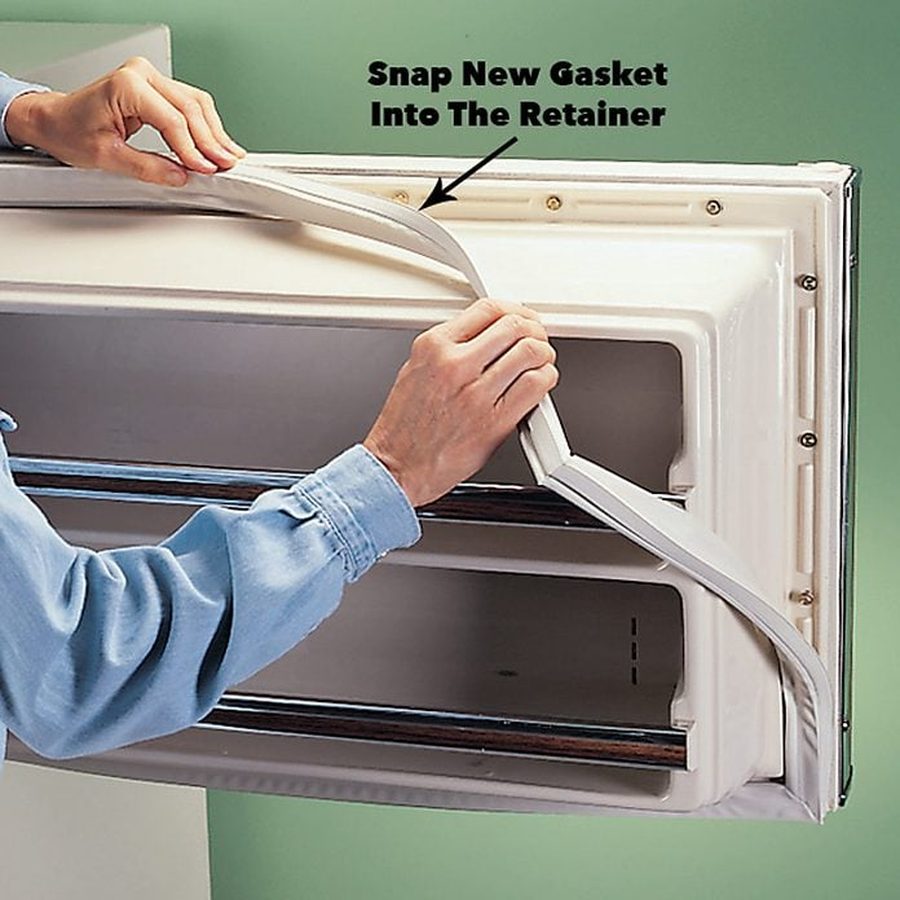
Refrigerator Start Relay: How to Test & Replace
The $15 part behind most “fridge won’t start” failures.

Best Air Purifier for Small Apartments
Seven purifiers tested for noise, cost and real-world CADR.