
Air Quality
Do Dehumidifiers Remove Pet Odor? What Actually Works
A dehumidifier is not an air freshener. But it does remove one of the things that makes pet odor stick to a room — and that changes everything.
How to remove pet odour and musty smells from an apartment: enzyme cleaning, carbon air purifiers, dehumidifiers, and the humidity level that keeps odour down.

Pet odour and musty smells are moisture problems as much as cleaning problems. Damp air makes bacteria more active and locks odour into fabrics, so the same smell becomes far stronger. These guides cover the full fix: enzyme cleaning, carbon air purifiers, dehumidifiers, and the humidity target that keeps odour from coming back.
A house loses odour through a hundred small leaks — a drafty door, an attic that breathes. An apartment does not. Sealed windows, shared walls and a single HVAC return mean whatever an animal leaves behind stays in the same air you breathe. Worse, apartment carpet is often older than the building's last tenant, and a worn carpet backing holds spilled urine at the pad, well below anything a surface clean reaches.
That is why the smell seems to come back in warm, humid weather. Urine crystals re-release odour compounds when humidity rises, which is the mechanism that makes a room smell "fresh" after a dehumidifier has run for an hour and then smell again two days later. Removing the source and controlling moisture are two separate jobs, and an apartment usually needs both.
| Step | What it removes | Renter note |
|---|---|---|
| 1. Enzyme clean | Urine crystals, saliva, marking residue in carpet, grout and fabric | No equipment needed, deposit-safe; test on a hidden patch first |
| 2. Carbon filtration | Odour molecules already suspended in the air | Plug-in and portable — nothing fixed to the wall, nothing to unmount at move-out |
| 3. Humidity control | The moisture that lets odour crystals re-activate | Small dehumidifier with a tank; empty it, no plumbing needed |
Skipping step one is the most common mistake. A purifier running over a carpet that still holds urine will keep working and the room will keep smelling, because the source emits faster than the filter clears.
HEPA is the filter everyone knows, and it does an excellent job on what causes allergies — dander, hair, dust mite debris. It does almost nothing for odour. Odour molecules are gases, measured in the tens of nanometres, and HEPA's mesh is simply too coarse to catch them. Per ASHRAE guidance on gaseous contaminant removal, you need media that adsorbs gas: activated carbon, or a carbon blend with potassium permanganate for stubborn compounds like ammonia in cat urine.
The spec that matters is not "carbon filter included" but the weight of the carbon. Most cheap purifiers ship a thin carbon dusting that saturates in a few weeks and then behaves like no carbon at all. Look for a measured carbon weight in the product listing; a purifier with 1 kg of carbon will outlast one with a sprayed-on layer by an order of magnitude. When you size the unit, the AHAM Clean Air Delivery Rate (CADR) tells you how many cubic feet per minute of filtered air it moves — for odour specifically, prioritise carbon mass over raw CADR, because a high-CADR unit with no carbon moves clean air over a smell that never leaves.
The EPA recommends keeping indoor relative humidity between 30 and 50 percent, and for odour control the useful target is the middle of that band: 40–50 percent. Below 40 percent the re-release of urine crystals slows sharply, but you pay for it in dry eyes and irritated airways, which matters more in a small bedroom than in a large living room. Above 55 percent, mould joins the pet smell and the two are hard to tell apart until you find the growth.
| Relative humidity | What happens to pet odour | What to do |
|---|---|---|
| Under 40% | Re-release nearly stops; smell at its weakest | Fine short-term; don't run a dehumidifier this hard year-round |
| 40–50% | The sweet spot — odour suppressed, room comfortable | Target this. Measure with a cheap hygrometer, not by feel |
| 50–60% | Odour returns within a day; dust mites thrive | Run a small dehumidifier in the worst room |
| Above 60% | Odour plus active mould growth | Fix the source; this is often a landlord repair issue |
Pet dander — the shed skin flakes, not the fur — is small enough to stay airborne for hours and is the usual trigger for the sneezing and itchy eyes people blame on hair. A HEPA stage rated H13 or better captures it, and a CADR sized to the room clears it at a useful rate. Size the purifier to the actual room, not the apartment: a unit matched to a 250 sq ft bedroom will do more for you than a larger one run in the living room, because you spend the night breathing bedroom air. Place the purifier where air can circulate around it — never shoved into a corner or behind a couch, which starves the intake and cuts the real-world CADR well below the box number.
Pets and small apartments are a difficult combination for air quality, because there is simply less volume of air to absorb what a pet produces. But it is solvable in a predictable order, and the order matters: cleaning removes the reservoir, filtration removes what is airborne, and humidity control stops the odour from regenerating.
Pet odour is not a single airborne molecule — it is a reservoir held in soft furnishings and, for cats especially, in dried urine proteins that re-release whenever humidity rises. Vacuuming the air will not fix a couch that holds the source. Wash bedding and covers at 60 °C, vacuum upholstery with a sealed-HEPA machine, and treat hard surfaces with an enzyme cleaner intended for pet waste.
For dander and hair, a HEPA filter is the tool. For odour, only activated carbon in a meaningful quantity works — a thin carbon sheet does nothing measurable. See air purifiers for pets and dehumidifiers for pet odour.
For allergy sufferers the target is dander, dust-mite allergen and pollen rather than odour, so filtration and cleaning move to the front of the list and deodorising matters less.
| Symptom | Likely trigger | Priority fix |
|---|---|---|
| Sneezing near the couch | Dander and dust in upholstery | Sealed-HEPA vacuum plus washable covers |
| Puffy eyes on waking | Dust-mite allergen in bedding | 60 °C bedding wash, bedroom HEPA unit |
| Odour that returns on damp days | Humidity re-releasing urine proteins | Hold humidity under 50%; see humidity control |
| Congestion in a cat household | Fel d 1 protein carried on dander | Filtration plus litter-box management — see cat-litter odour |
Deposit and lease considerations matter as much as air quality here. Keep a documented cleaning routine, protect carpet with a machine-washable rug where the pet sleeps, and address odour early rather than at move-out, when it is far harder to remove — see carpet cleaners for pets and getting pet hair out of a couch.
A dehumidifier is not an air freshener. But it does remove one of the things that makes pet odor stick to a room — and that changes everything.
It is a fair question, and the answer is more useful than a simple yes or no. Here is exactly what a dehumidifier does to pet smell — and what it cannot.

The answer depends entirely on one thing: whether the purifier has carbon. Here is how to tell, and how to set one up so it actually removes dog smell.
Most purifiers sold for pets remove dander and leave the smell. Here is how to pick one that removes dog odor, and the specs that actually matter.
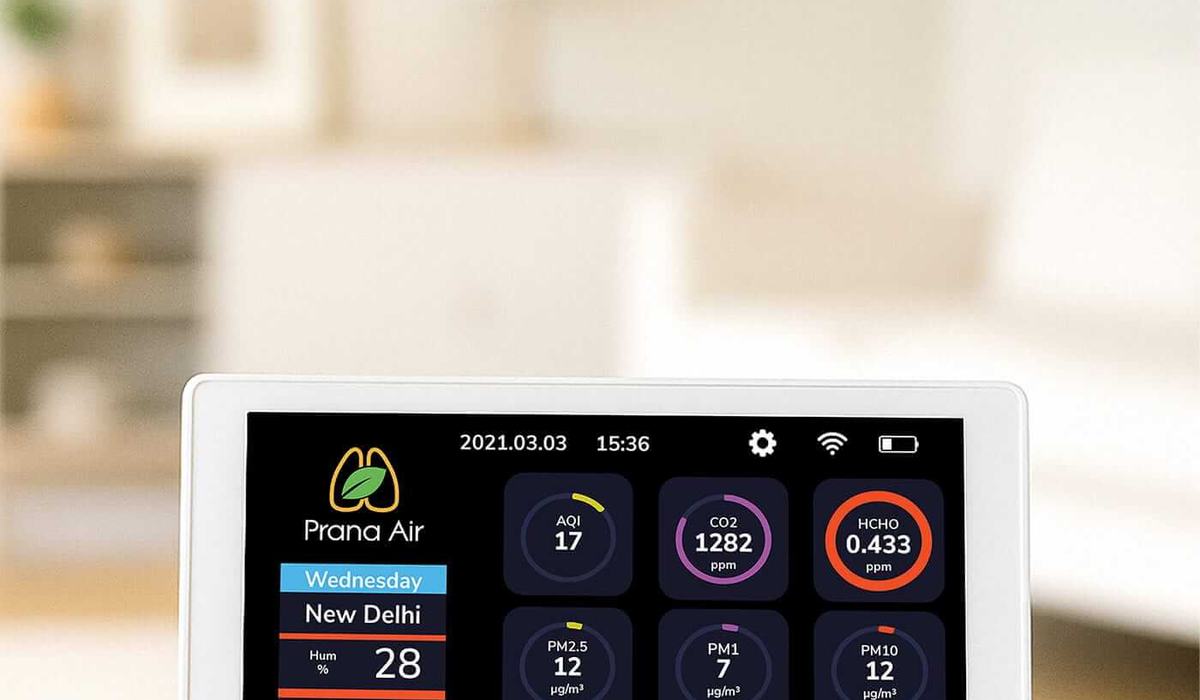
Musty smell is a symptom, not a problem. Find the source with the decision tree below, fix the moisture behind it, and the smell goes away for good.
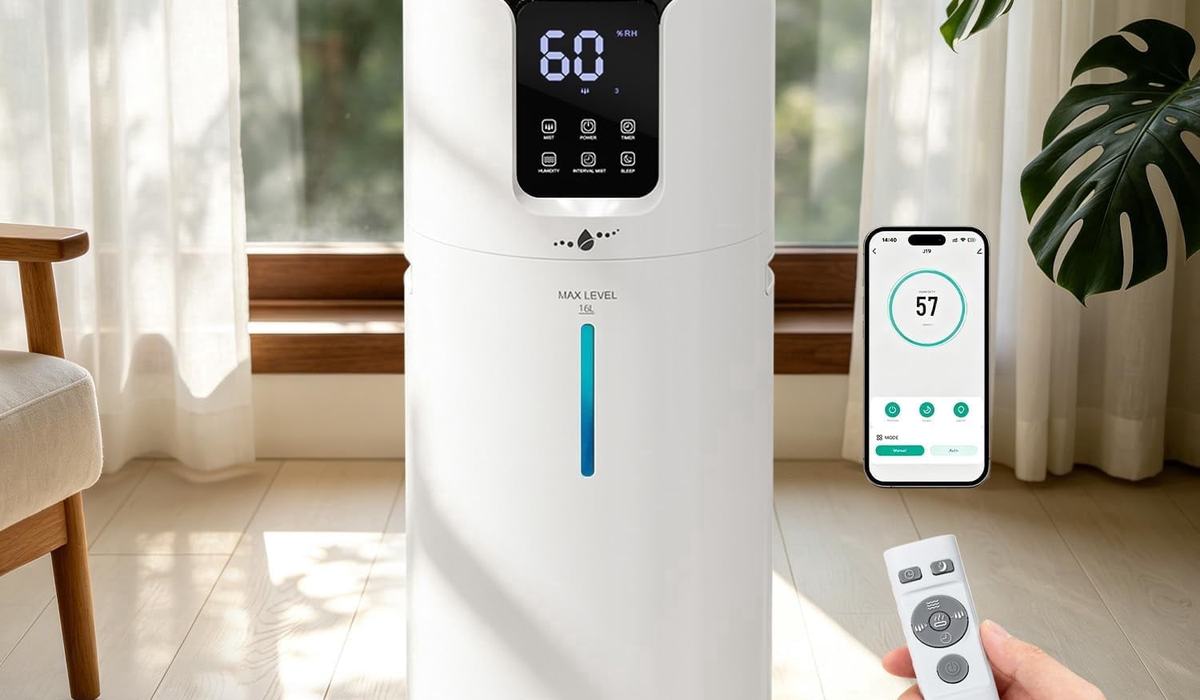
A humidifier that is hard to clean becomes a mould dispenser. Here is how to choose one you will actually keep clean, and how to clean it properly.
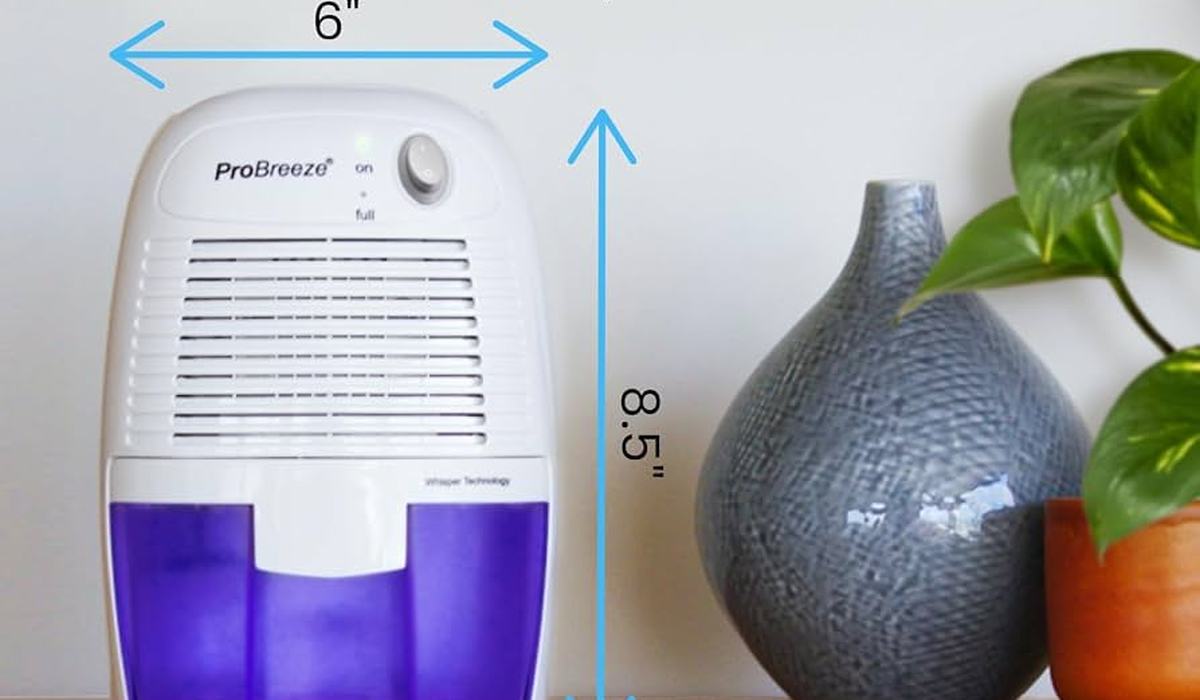
A closet, a small apartment and a mould problem all need a dehumidifier that fits. Here is how to size one for a tight space, and what to look for.
Basement flats are the dampest homes there are. Here is the capacity you need, how to place it, and how to keep a below-grade apartment dry.
What it fixes, what it cannot, and the routine that clears dog odour.
The mechanism, the 45% humidity target, and how to measure the change.
Musty, smoke, cooking and pet odours rated by how much it helps.

Find the fabric holding it, dry the room, kill the growth, stop the return.
Find the hidden source and know when it is the landlord's job.